
India’s 2026 State Elections: Bengal Goes Saffron, Tamil Nadu Goes Post-Dravidian, but Regional Patterns Persist

HIIA Analysis – Written by Zsolt Trembeczki
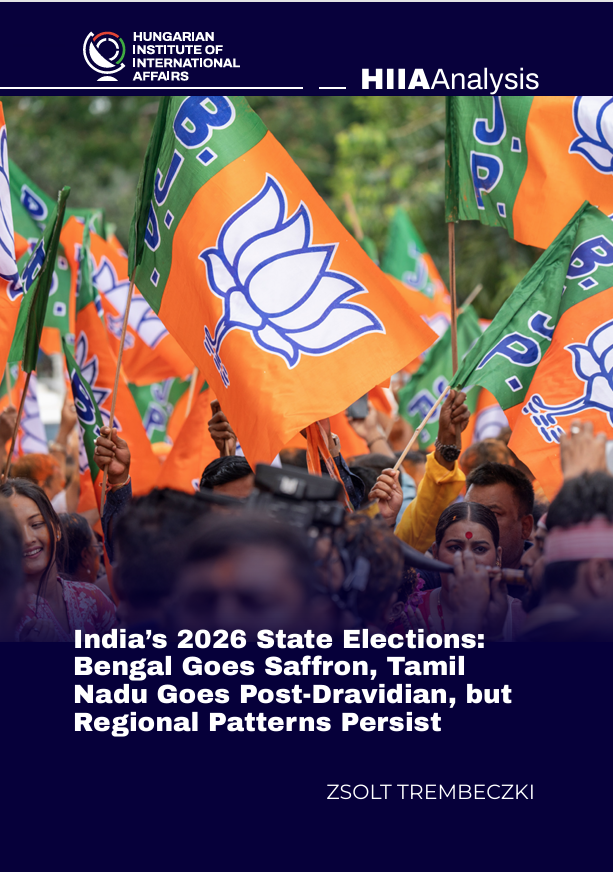
India’s 2026 state elections were among the more consequential subnational contests since the Bharatiya Janata Party (BJP), under Narendra Modi’s leadership, came to power nationally in 2014. BJP achieved a historic victory in the state of West Bengal and further consolidated its position in Assam, Tamil Nadu’s long-standing Dravidian duopoly was disrupted by Tamilaga Vettri Kazhagam (TVK), and the Congress-led opposition achieved a major comeback in Kerala. Combined, these developments revealed both the continued geographic expansion of Hindu nationalist politics and the persistence of important regional constraints on that expansion.
The PDF version is available here!
The elections also highlighted the weakening of several established regional parties and the growing electoral importance of citizenship politics—without, however, proving allegations that the massive purging of electoral rolls played a significant role in BJP’s victory either in Assam or in West Bengal. Instead, the downfall of multiple incumbent state governments can in part be traced back to the paradoxical effect of centralized, technology-intensive welfare schemes: direct-to-citizen delivery on the one hand strengthens chief ministers’ personal political brands while on the other hand undermines their parties’ local structures and electoral mobilization capabilities. This phenomenon’s recurrence across multiple Indian states suggests a possibly more generalizable tension between technology-enabled governance and traditional party organizations in contexts in and outside India where highly personalized leadership and welfare-based political legitimation coincide.
At the same time, it is also apparent that India’s remaining anti-BJP strongholds are not politically equivalent: while West Bengal’s result completed BJP’s emergence as a major force across almost the entire Indo-Aryan political sphere, Tamil Nadu and Kerala preserved the distinct regional character of their political environments, where Hindu nationalists continue to face structural limitations.
For European and Hungarian policymakers, these persistent differences underline the importance of, besides New Delhi, also engaging with subnational entities like state governments. These are increasingly important actors in economic governance, industrial policy, and investment attraction, and their regulatory and political environments—even with BJP on the rise nationally—remain highly varying. In Hungary’s specific case, this approach could help complementing an already relatively strong cultural diplomacy with a more targeted business diplomacy that yields tangible economic benefits.
Overall, India’s political geography continues to trend towards a more nationally uniform political order, but this trend remains incremental and 2026’s state elections do not represent a major breakthrough, but rather one step in this incremental process.
Introduction
Why State Elections in India Matter
India’s 2026 state elections may prove to be one of the most important political turning points between Prime Minister Narendra Modi’s third and narrowest general election victory in 2024 and the next parliamentary contest in 2029. A federal parliamentary republic, much of everyday politics and governance in India happens at the level of 28 states and eight smaller “union territories.” These elect their local legislative assemblies every five years, after which the leader of the winning party usually becomes the given state’s chief minister (head of government). Of the four states and one union territory in contest in 2026, Modi’s Hindu nationalist Bharatiya Janata Party (BJP) or its local allies won in three, and decades-long arrangements finally collapsed in the two largest races, West Bengal and Tamil Nadu. West Bengal, which has long been northern India’s steadiest anti-BJP stronghold, finally turned out for the prime minister’s party, while in Tamil Nadu, a movie star’s upstart party broke the half-a-century-old duopoly of local establishment parties.
The results of state elections in India are of local, national, and increasingly global importance. Locally, the 2026 results highlight a broader transformation of how parties interact with voters. Across several states, technology-driven welfare-delivery systems, both personalized and centralized, built to establish a direct political relationship between voters and charismatic chief ministers, were revealed to have substantially hollowed out formal, traditional party structures. In the end, while politically beneficial in the short term, these “techno-patrimonial” welfare policies substantially weakened grassroots-to-center channels that once enabled feedback and policy execution, thereby undermining the very chief ministers whose dominant status they were designed to perpetuate.[1] Nationally, some commentators described this year’s state election cycle as part of the “Gen Z-led tsunami”[2] that has been spreading throughout South Asia since 2024;[3] others now hail BJP as a “party without geographic constraints.”[4] Prime Minister Modi himself declared that “the lotus is blooming from Gangotri to Gangasagar”—meaning, from the Himalayas to Bengal’s Ganges Delta, with the lotus being BJP’s official symbol.[5] These claims somewhat overstate the case: despite its breakthrough in West Bengal and predictable win in Assam, BJP remains demographically and geographically constrained in some parts of the country. BJP’s showing in Tamil Nadu was fairly weak, and the southwestern coastal state of Kerala remains the country’s most resilient center left–Secularist ecosystem. The results did mark another major stage in the territorial expansion of the Hindu nationalist movement and its Hindutva ideology—but, contrary to some narratives, a nationally uniform political order will not emerge anytime soon.
From a global and European perspective, domestic politics have been and will remain a non-trivial variable behind India’s future economic trajectory, trade potential, manufacturing ambition, technological ascendance, and strategic importance in the Indo-Pacific region. The success or failure of the central government’s industrial policies often depends on state-level implementation and local efforts to attract foreign direct investment. State legislative assemblies also elect the upper house of the Parliament of India, giving them indirect but crucial influence over national legislation. For European states and business stakeholders seeking deeper trade, investment, technological, and supply-chain partnerships with India, questions of center–state relations, institutional predictability and capacity, and social stability become all the more consequential—and off-year elections are useful indicators. This also makes sustained engagement with certain state governments an important complement to European and Hungarian diplomatic relations with India at the federal level.
The Baseline: India’s Party System and Electoral Geography
While appearing bipolar at the national level, India’s party system is structurally highly fragmented. The two largest parties are Prime Minister Narendra Modi’s Bharatiya Janata Party (BJP), a right-wing Hindu nationalist formation known for its blend of grassroots energy, organizational discipline, relatively pro-business policies, and antagonism towards the country’s Muslim and Christian minorities, and the left-of-center Indian National Congress, inheritor of the country’s Secularist national independence movement and fiefdom of the patinated Nehru–Gandhi political dynasty. The two main parties’ local allies are organized into two ideologically heterogenous national alliances: the BJP-centered National Democratic Alliance (NDA) and Congress’ Indian National Developmental Inclusive Alliance (INDIA). In several states, however, local power is held by strong regional parties, often organized along caste or ethno-linguistic lines, rather than based on ideology. Due to their local organizational foundations, these regional parties can be indispensable interlocutors both in state and national elections and often leverage their pivotal role as coalition partners in the central government.
When Narendra Modi first came to power in 2014, the BJP and its allies governed only a handful of states, mostly concentrated in North-Central India’s “Hindi Belt” and some neighboring, culturally adjacent Indo-Aryan states. The Dravidian South, the geographically distant Northeast, and West Bengal, inheritor of a rich and unique Bengali cultural legacy, were widely seen as out of BJP’s electoral reach. From 2014 on, however, BJP had more good than bad years in terms of state election outcomes, and since the 2026 cycle about four-fifths of Indians live in states governed either by the BJP or its coalition partners.[6] Hindu nationalist politics’ direct, state-level influence now stretches from Gujarat in the west to Assam in the east, from the Himalayan foothills to the north deep into the Deccan Plateau to the south. At the national level, in the 2019 general election, BJP further expanded on its 2014 victory, and while in 2024 its showing was significantly weaker, it still secured a parliamentary majority for its coalition government by aligning with local forces: the Telugu Desam Party, or TDP, in Andhra Pradesh and the Janata Dal (United) in Bihar).
This steady geographic expansion has been the result of the BJP’s persistent effort to build regional footholds even in areas outside its traditional home turf, either by or through a combination of aligning with local parties, convincing local parties’ or Congress chapters’ key figures to switch sides, making welfare promises, and leaning into existing caste-based or anti-Muslim resentments.[7] BJP’s national expansion also took place amid broader concerns about democratic backslide at both the central and state levels of government. Opposition parties have repeatedly accused the BJP-led central government of weaponizing formally independent agencies against political opponents, journalists, and non-governmental organizations. The imprisonment of Delhi Chief Minister Arvind Kejriwal during the 2025 Delhi election campaign on charges that were later dropped was one of the most striking examples.[8] The growing importance of electoral administration is another dimension that casts a shadow on the 2026 state elections, especially in Assam and West Bengal. Voter verification exercises, citizenship scrutiny, the purging of electoral rolls, and the large-scale deployment of the Central Armed Police Forces have become politically charged issues and, in line with BJP’s strategy, have mobilized voters along Hindu–Muslim sectarian lines.
Congress experienced the reverse trajectory. Once having governing India for decades in a dominant-party system, its control has now been reduced to a small number of states and less than one-fifth of parliamentary seats. Despite its national infrastructure still being superior to that of state parties, the number of states where Congress plays the sole or even dominant role in local government is declining. It is still the largest single force in the Opposition and INDIA alliance, but its national influence is now dependent on cooperating with a range of local partners, and in several states these local partners are the main opponents of BJP. This lopsided national party system makes the weakening of regional opposition parties strategically significant. The 2026 election cycle severely damaged two major pillars of the Congress-led INDIA alliance: the Trinamool Congress (TMC) in West Bengal and the Dravida Munnetra Kazhagam (DMK) in Tamil Nadu. When combined, these losses have proportionally strengthened Congress within the INDIA alliance, but at the same time have also weakened the alliance’s relative position vis-à-vis the BJP. It may seem that the foremost question for the future is whether BJP will be able to repeat its 2026 West Bengal breakthrough in the upcoming 2029 parliamentary election, when almost 8 percent of seats will be decided in that one state. It is, however, potentially even more consequential how the 2026 results will affect the intra-INDIA alliance politics and whether it will prompt Congress to attempt asserting its dominant status over its weakened regional allies. In an optimistic reading this could increase the internal coherence of the INDIA campaign; at the same time, it is dubious whether Congress has the organizational capacity to contest independently in many crucial states.
West Bengal’s Fall
BJP’s Expansion and the Collapse of the Bengali Exception
West Bengal was the most consequential battleground of the 2026 Indian state election cycle. Home to more than one hundred million people and with a history of Communist, Congress-led Secularist, and regionalist governments, the state had long been one of BJP’s largest unrealized political ambitions. Bengal’s strong regional identity, shaped by its own rich literary and intellectual heritage and political traditions, was seen as clashing with Hindutva ideology’s homogenizing impulses. Consequently, BJP has historically struggled in Bengal, with its leaders frequently portrayed as bohiragoto—“outsiders” in Bengali. For fifteen years, West Bengal had been governed by Chief Minister Mamata Banerjee’s Trinamool Congress (TMC), a Bengali regionalist and ideologically centrist–Secularist party and splinter of the Indian National Congress. “Mamata,” as she is usually referred to, herself cultivated a populist image deeply rooted in subnational Bengali identity. In 2021, she successfully resisted a major BJP challenge by mobilizing women, welfare beneficiaries, and Muslims behind TMC.
By 2026, however, the political environment had changed substantially. This was in the making for over a decade: BJP’s statewide popular vote share rose from 10.7 percent in the 2016 state election to around 38–40 percent in the 2019 general, the 2021 state, and the 2024 general elections; with Trinamool Congress’ vote share consistently in the mid-to-high 40 percent range. Then, in 2026, BJP won 45.9 percent of the popular vote, resulting in the Hindu nationalists increasing the number of their legislative seats from 131 to 208 (out of 294 seats in total) and Trinamool losing almost two-thirds of its own seats with just 40.7 percent of the popular vote.[9] The scale of victory essentially mirrored the previous three state-wide results: in India’s winner-takes-all electoral system, a relatively small edge in popular votes often lead to landslide wins in terms of legislative seats.
Standard Explanations: Incumbency Fatigue, Hindu Consolidation
Several factors contributed to the outcome, most notably: incumbency fatigue, BJP’s Hindu consolidation, the recent Special Intensive Revision of West Bengal’s voter rolls, and Trinamool’s organizational atrophy due to digital welfarism. While various political actors and media voices tend to single out one or another,[10] given the relatively narrow popular vote margin it is likely that all were non-trivial contributors to the overall result. After all, Indian politics, even locally, rarely supports monocausal explanations. The first two factors were crucial but unsurprising, the third was non-trivial but likely exaggerated by critics, and the fourth remains under-reported, under-appreciated, and possibly the most interesting generalizable lesson of the West Bengal election.
Regarding anti-incumbency sentiments, TMC’s fifteen years in government has led to a not unusual accumulation of corruption allegations, local patronage extraction, and resentment against party strongmen.[11] This was hardly surprising, especially given that the state’s decades-long relative decline was not turned around under Mamata’s governance.[12] In the other corner, BJP has achieved some success in consolidating the votes of the state’s Hindu majority, traditionally divided along caste, rural–urban fault lines, and ideology.[13] Muslims, meanwhile, traditionally voting as a single bloc for the leading Secularist force, fractured across Trinamool Congress, the Indian National Congress, and smaller Secularist, minority rights, and leftist parties.[14] “Hindu consolidation,” however, ought not to be overstated. While BJP itself prefers this narrative,[15] and Hindu nationalist mobilization has indeed improved over the course of a decade, the Hindu vote still remains divided overall, and the aforementioned incumbency fatigue is likely a stronger explanation for why some Hindu segments moved from Trinamool to BJP this time.[16]
Electoral Roll Purge: Excessive Claims About an Excessive Process
The explanation favored by the losing side and among Secularist and foreign media, namely the mass purging of voters from West Bengal’s electoral name rolls by BJP-adjacent central authorities, is also somewhat limited in its explanatory power. A Special Intensive Revision (SIR) in West Bengal was launched in 2025 by the Electoral Commission of India (ECI), citing claims that a significant number of voters may actually be non-naturalized or outright illegal immigrants from neighboring Bangladesh. Opposition parties rejected these claims and accused the BJP-led central government of attempting a purge of opposition voters from electoral rolls. By the time the 2026 election was held between April 23 and April 29,[17] over 9 million names (about 12 percent of the electorate) had been removed from the voter roll, including individuals who had died, moved out of the state, or were found to not be citizens of India. The proportion was astonishing, and anecdotal evidence suggests there had been anomalies around the evaluation of voting eligibility.[18] The process was accompanied by the deployment of about 240,000 Central Armed Police Forces servicemembers, which critics claimed amounted to the militarization of civilian politics. Supporters countered that heavy police deployment was necessary given West Bengal’s history of electoral violence.[19]
Claims that the SIR was a decisive factor behind BJP’s victory stand, however, on less solid ground. At the state level, the SIR did not have a negative effect on voter turnout—turnout in both absolute and relative terms actually set records.[20] At the local level, multiple BJP-critical news sources point to around 150 constituencies where the number of struck names exceeded the winner’s margin[21]—in most of these cases, however, this could only have affected the outcome if those struck supported TMC at highly implausible ratios. The demographic and geographic composition of removed names in fact reflects fairly well on the state’s population when religious demography, the proximity of Muslim-majority Bangladesh, and immigrant communities’ clustering near borders and metropolitan areas are taken into account.[22] The number of constituencies where both BJP won and the electoral roll purge could have meaningfully affected the outcome is probably well below two dozen—and perhaps even less than one dozen.[23] Based on the numbers published by the news sources cited above, but contrary to some of their dubious interpretations of those figures,[24] the SIR is very unlikely to have been a significant factor behind BJP’s electoral win in West Bengal, even if it may have affected the new Legislative Assembly’s exact composition at the margin.[25]Where the entire SIR exercise may have had a more significant (albeit hardly quantifiable) effect was the reinforcing of Hindu–Muslim polarization, generating of anxieties among the Muslim community regarding citizenship and belonging, and mobilizing of Hindu votes along the lines of sectarian suspicion.
An Overlooked Factor: Personalized Welfare Politics Undermining Party Structures
Amid the unsurprising incumbency fatigue, partly true but very relative Hindu consolidation, and exaggerated claims about the SIR’s impact, the most genuinely interesting lesson was the organizational effects of centralized, technology-intensive welfare politics—more specifically, how digitalized, direct-to-citizen welfare delivery solutions have hollowed out traditional state and establishment-party networks that in the past connected party centers to grassroot-level organization and ultimately to voters and local communities.[26] During previous election cycles, the TMC government relied heavily on innovative, technology-enabled welfare schemes and delivery methods directly branded around Chief Minister Mamata Banerjee.[27] While the bypassing of older structures, where local administrative and grassroots party functions were often blurred, made these programs more efficient and less corrupt, it also undermined the local ruling party’s ability to collect bottom-up “mood reports” and channel them into top-down strategy-making. Furthermore, while citizens increasingly associated welfare benefits directly with the Chief Minister, local cadres were left associated with corruption, intimidation, and “cut money” politics—while retaining the responsibility for election-day mobilization. In short, while designed to increase Mamata’s popularity, the system weakened the accountability relationship between leadership, organization, and population. This problem was not unique to West Bengal: similar tensions appeared in Kerala and Tamil Nadu as well.[28]
Consequences at Home and Abroad
In the aftermath of the election, in a move highly unusual in India’s political culture, Mamata Banerjee refused to resign as Chief Minister, alleging that losing her own seat and the legislative majority was due to a BJP-led conspiracy involving the Election Commission of India.[29] Her tenure nevertheless ended with the May 7 dissolution of the outgoing Legislative Assembly by State Governor R.N. Ravi.[30] Post-election violence reportedly resulted in the death of 2–4 people.[31]The Indian National Congress, the TMC’s ally at the national level, accused Mamata Banerjee’s government of misgovernance and corruption that paved the way for BJP’s victory.[32] Once a major force in the state, Congress may see an opening in the collapse of a local Secularist force, but it is dubious whether its organizational rebuild could yield a satisfying result by the next large contest, India’s 2029 general election. Other opposition parties, such as the Communist Party of India (Marxist) (CPI(M)) also blamed TMC’s corruption for BJP’s breakthrough.
The West Bengal result’s broader significance lies in what it reveals about India’s changing political geography. BJP is now either in power or a serious contender across nigh all major Indo-Aryan-speaking regions: besides the core Hindi Belt, Gujarat, Maharashtra, Rajasthan, and Assam have all developed strong BJP ecosystems despite possessing distinct linguistic or regional identities of their own. West Bengal’s political trajectory now increasingly resembles this wider regional pattern.
The election’s results were closely watched from neighboring Bangladesh, too. Bangladesh and the Indian state of West Bengal, which was once the eastern and western half of the historical region of Bengal, share the Bengali language and rich cultural and literary traditions—as well as over 2,000 kilometers of porous border. While Narendra Modi’s government had excellent relations with Bangladesh’s pre-2024 regime, after the ousting of Prime Minister Sheikh Hasina, these relations worsened considerably. Also, despite good diplomatic relations, BJP’s local chapter has long campaigned against the “infiltration” of Bengali Muslims into West Bengal. At the international level, the recent election in Bangladesh gives some hope for normalization,[33] and West Bengal’s state government will have little direct input into New Delhi’s foreign policy. Nevertheless, the possible increase in sectarian tensions on the Indian side of the border could present a fat-tail risk in their relations.[34]
From the Northeast to the South: 2026’s Other State Races
Tamil Nadu: The Mutation of Dravidian Politics
Tamil Nadu produced the second major political shock of the 2026 election cycle. Like West Bengal, this South Indian state of 77.6 million people has a strong regional identity, but unlike Bengali, Tamil belongs to the family of Dravidian languages—a language group that fundamentally separates most of South India from the country’s central and northern parts and, among other reasons like regional variations in caste politics, religious practice, and class ideologies, have made the South a difficult terrain for the North India-based, predominantly Indo-Aryan Hindu nationalist movement.
For decades, politics in Tamil Nadu revolved around a stable duopoly of the Dravida Munnetra Kazhagam (DMK) and the All-India Anna Dravida Munnetra Kazhagam (AIADMK) parties. Both emerged from the broader Dravidian movement, an early-to-mid-twentieth-century intellectual, political, and popular current defined by social justice politics, anti-upper-caste mobilization, regional autonomy, Tamil linguistic nationalism, and resistance to perceived North Indian domination.[35] By the 2010s and 2020s, the DMK had aligned itself more strongly with Congress and the Secularist opposition camp on the national stage. The AIADMK, meanwhile, gradually softened its Dravidian ideological framework and aligned itself more closely with the BJP-led National Democratic Alliance. The 2026 election, however, was won by neither. Then, in 2024, film star Chandrasekaran Joseph Vijay launched the Tamilaga Vettri Kazhagam (TVK), an upstart party built around his extensive fan-club network. Two years later, TVK won 108 legislative assembly seats (out of 234) with 34.92 percent of the popular vote. DMK and AIADMK came in second and third, respectively, each losing about 12–13 percent of their share of the popular vote. While short of an outright legislative majority, TVK’s breakthrough was extraordinary. Tamil Nadu has had a long history of fusion between the cinematic industry and state politics, but earlier film star-turned-politicians like Chief Ministers M.G. Ramachandran and J. Jayalalithaa emerged through the established Dravidian party systems.[36] Vijay, in contrast, disrupted the “Dravidian duopoly” itself.
Vijay’s vote bank mostly consists of younger voters, women, and politically frustrated sections of the electorate, attracted by his image as a fresh outsider to both dynastic politics and bureaucratized party machines. This was a particularly strong message in an environment where two grand old leaders of the Dravidian establishment parties—DMK’s M. Karunanidhi and AIADMK’s J. Jayalalithaa, both former chief ministers—were relatively recently deceased. TVK also benefited from broader frustration with the incumbent DMK government’s alleged dynastic succession politics and perceived economic stagnation. Crucially, TVK did not reject Dravidian ideology outright: foundational figures were not attacked; Tamil identity, social justice, and welfare populism remained important parts of Vijay’s campaign; and explicit communal polarization was avoided.[37] In this sense, TVK represents not the end but rather a mutation of Dravidian politics.
The BJP itself remained weak in Tamil Nadu. Despite the previous decade’s modest gains in parliamentary elections, the Hindu nationalists’ social base in the state remained relatively narrow, concentrated among upper-caste groups, sections of urban voters, North Indian migrants, and specific districts such as Kanniyakumari.[38] After peaking in the 2024 national general election at 11 percent, this time BJP only gained 2.97 percent of the popular vote, and won only one seat—three less than in the last state election in 2021. Therefore, unlike in West Bengal, the Tamil Nadu result’s overall relative impact on the BJP and its opposition is not yet certain. On the one hand, like Trinamool Congress, DMK has been one of the strongest, organizationally most capable regional pillars of the anti-BJP Secularist national coalition. Even if TVK itself eventually aligned with Congress and formed a state government with Congress support, this pillar has now been destabilized. The political race in Tamil Nadu is now firmly three-way, and this may increase the chance of Secularist infights and maybe even of BJP’s allies making inroads back to power. On the other hand, the state remains firmly outside Hindu nationalism’s direct regional reach—in this regard, South India—and Tamil Nadu in particular—remain markedly different from Indo-Aryan North India. Moreover, the decline of regional third-party pillars may strengthen the Indian National Congress’ claim to being the nationally best-organized and best-positioned vessel for anti-BJP politics. Whether Congress is actually organizationally capable of rebuilding itself in key states like West Bengal and Tamil Nadu remains to be seen, but even if stuck with regional allies, its growing weight could bring some much-needed stability to India’s perennially unruly opposition alliance.
Assam: Consolidation Through Polarization and Governance
Of the major states voting in 2026, Assam’s results were the most predictable. Chief Minister Himanta Biswa Sarma led BJP to a third consecutive victory (and his second consecutive mandate as chief minister), further consolidating Hindu nationalist dominance in Northeast India. BJP and its broader coalition, the National Democratic Alliance, won altogether 102 seats in the state’s legislative assembly (of 126 in total), gaining 48 percent of the popular vote. The opposition suffered major defeat: Congress itself marginally improved its vote share but lost ground in the Legislative Assembly; its local allies saw both their vote share and legislative seats decreasing.[39]
While Assam is not one of India’s largest states with its population of about 36 million, Chief Minister Sarma himself has become one of BJP’s most influential regional leaders. Defecting from Congress in 2015, his role was central in expanding Hindu nationalist influence in India’s geographically isolated, ethnically, religiously, and topographically diverse, economically relatively underdeveloped northeastern quasi-exclave. Welfare delivery, infrastructural development, aggressive Hindutva identity politics, and highly personalized leadership are key elements of his political style.[40] Sarma has been a leading voice in the politicization of Muslim Bengali immigration in Assam.[41] As the head of Northeast India’s largest and centrally located state, he has also clashed with politicians from smaller neighboring Christian- and tribal-majority hill states.[42] The 2026 election was effectively a referendum on Sarma. The BJP campaign emphasized his welfare programs, such as the Orunodoi scheme (a direct benefit transfer for women’s empowerment), and Hindu Assamese identity politics, including on the issues of citizenship and Bangladeshi migration.[43] In this latter regard, Assam has come to occupy a distinctive place in India’s citizenship politics. Concerns over illegal Bangladeshi immigration here predate BJP, and, unlike in predominantly Bengali-speaking West Bengal, the Hindu–Muslim sectarian dimension intersects with demographic insecurities, Assamese nationalism, and linguistic identity.[44] These concerns have over time become integrated into a broader Hindu nationalist framework and led to (as of yet mostly unimplemented) nationwide initiatives to accelerate the naturalization of non-Muslim immigrants but more strictly scrutinize the citizenship status of Muslims.[45]
Altogether, as part of Assam’s Special Revision process for the 2026 Assembly elections, more than one million names were removed from the state’s electoral rolls—most for technical reasons (deaths, moves to other states, duplications, etc.), but at least about a quarter of a million under titles (such as final-stage “claims and objections”) that could plausibly include illegal immigrants or other non-citizens.[46] In addition, about 93,000 individuals were deemed so-called “doubtful voters” (“D-voters”) and barred from voting by the Electoral Commission of India.[47] Critics argue that these cleansings of the voter roll disproportionally targeted Bengali-speaking Muslims. As in the case of West Bengal, however, while the political weaponization of electoral roll reviews by Hindu nationalists is undeniable, the total volume of affected names is very unlikely to have had discernible impact on the statewide result.
Kerala: Congress Recovers, BJP Advances Incrementally
Results from Kerala produced the clearest victory for the Congress-led Secularist opposition. Politics in this southwestern state of 36 million is usually divided between the centrist United Democratic Front (UDF), encompassing Congress and its moderate local allies, and the Left Democratic Front (LDF), an alliance uniting various communist and socialist state parties, led by CPI(M). This time, the UDF won decisively, defeating the incumbent LDF government after the latter’s unusual back-to-back victories in 2016 and 2021. Congress and its allies now control 102 of 140 seats in the Kerala Legislative Assembly, while the LDF suffered one of its greatest statewide defeats in decades.[48] India has a long history of democratically elected communist governments at the state level. Besides Kerala, where this type of arrangement occurred for the first time in global history in 1957, the aforementioned state of West Bengal also has a long history of CPI(M) governments.[49] The LDF’s defeat in 2026 means that for the first time in half a century, India has not one single state governed by communist parties.[50] The result also suggests that despite the LDF’s surprise victory in 2021, Kerala is likely to revert back to its traditional pattern of alternating governments.[51]
Anti-incumbency is seen as having played a major role in this result. Allegations of corruption, anti-incumbency sentiment linked to CPI(M) Chief Minister Pinarayi Vijayan’s highly centralized leadership style and internal tensions weakened the LDF. It also struggled with contradictions between far-left ideological positioning and the necessity of pragmatic governance within India’s multiparty political system and market-based economic model. As in West Bengal, welfare politics also played an important role: like Mamata Banerjee, Vijayan built heavily on a personalized governance model and branding of welfare delivery and infrastructure development. These ostensible achievements, however, did not compensate for organizational fatigue and anti-incumbent sentiment.[52]
Congress, in contrast, mounted an unusually cohesive campaign. Congress’ own Kerala branch is infamous for its own factional struggles, but this time the party’s national leadership took a hands-on role in the campaign, and the presence of Rahul, Congress’ informal national leader, and his sister Priyanka went a long way easing intra-party fighting.[53] The UDF also successfully rebuilt support among Muslim and Christian voters[54] while improving candidate selection and ground mobilization.[55]As for BJP, it remained a relatively minor player in Kerala, although in terms of legislative assembly seats it achieved its best results yet in the state elections: three seats with 11.42 percent of the popular vote. This suggests that Kerala’s historically resistant state-level political ecosystem is not entirely insulated from national trends, but continues to broadly defy them.
Puducherry: Familiar Outcome in a Small Territory
Local elections in the union territory of Puducherry, created from the former French settlements in India in 1963 and home to 1.77 million people in 2026, carry far less national weight than elections in larger states, but the 2026 result still reinforced the broader trajectory of NDA consolidation. The National Democratic Alliance, led nationally by BJP but locally by the All India N.R. Congress (AINRC), won 38.7 percent of the popular vote and 18 of the 30 legislative assembly seats up for contest.[56] AINRC’s leader and namesake, Chief Minister N. Rangaswamy, will retain his seat for a second consecutive term and fifth term overall.
Conclusion: What the Elections Reveal About 2029
2024 was widely considered a year of global anti-incumbency sentiment[57]—a trend that in 2025 arguably weakened but not necessarily gone away.[58] Indeed, much of the media and analytical narrative surrounding India’s 2026 state elections followed an anti-incumbency framing—either presenting them as examples of anti-incumbency surges against local establishment parties[59] or, to the contrary, as examples of the nationally incumbent BJP defying a global anti-incumbent wave by further improving its local positions.[60] This split narrative itself demonstrates that “anti-incumbency” cannot be used as the single explanatory variable in Indian politics. It is far from obvious whether BJP’s breakthrough in West Bengal and the plight of the Dravidian parties in Tamil Nadu indicate the nationally incumbent BJP’s strength ahead of and likely good fortune in the next national election in 2029 or a broader anti-incumbent sentiment that could hurt BJP once the stakes shift from the state to the national level.
India’s 2026 state elections nevertheless revealed both the multiregional scale and the continuing regional limits of the post-2014 transformation of the country’s political geography. BJP’s victory in West Bengal was the 2026 cycle’s most consequential result, completing the party’s emergence as a major political force across the entire North Indian Indo-Aryan cultural-geographic sphere, including regions with strong non-Hindi linguistic identities. Assam’s result further entrenched BJP’s dominance in the Northeast’s largest and most important state. At the same time, the 2026 elections demonstrated the variation among India’s remaining anti-BJP strongholds. The “fall of West Bengal” does not mean Hindu nationalists have overcome all geographic or cultural constraints: Tamil Nadu, despite the collapse of its decades-old Dravidian duopoly, remains a very distinct political environment where BJP is still structurally weak. Kerala, meanwhile, showed that broad anti-BJP coalitions, including ones led by nationally ailing Secularist forces, remain viable under favorable local conditions.
This notwithstanding, the national implications for Congress and the broader INDIA alliance are ambiguous. The weakening of Trinamool Congress and DMK damaged two important pillars of the anti-BJP opposition ecosystem, yet it may also strengthen Congress’ claim to leadership within that camp. As regional allies become weaker or more fragmented, Congress could emerge as a more central coordinating force by default. Whether this would ultimately benefit the INDIA alliance (or whatever follows it) is unclear though. Congress remains the only opposition party with a genuinely national reach, yet it still severely lacks the organizational strength necessary to replace weakened regional parties in many key states. In this sense, the 2026 elections reinforced one central paradox in contemporary Indian politics: the decline of regional opposition forces may increase Congress’ relative weight within the opposition while simultaneously weakening the opposition’s overall ability to compete with BJP at the national level.
In short, Indian politics has become more nationally uniform than before—but only at the margins, with regional differences and specificities still heavily applying. State-level political systems are becoming more fluid as local established parties are facing mounting organizational challenges both from national and emerging local competitors. Electoral competition shaped by the interaction of identity politics, welfare delivery, leadership personalization, and institutional contestation is nothing new in India, and these dynamics are certainly not disappearing.
The mechanisms through which these issues or dimensions affect electoral outcomes do, however, show interesting and partly new patterns. To the point of welfare delivery, across several high-profile states, highly centralized welfare models appear to have generated an unintended consequence: while strengthening the personal brand of powerful chief ministers in the short term, they have weakened the intermediary party structures that link state governments to local communities. To the point of institutional contestation, in both West Bengal and Assam debates surrounding voter-roll revisions, citizenship verification, and electoral administration became integral parts of electoral mobilization, forming a powerful and electorally combustible mix with identity-based Hindu nationalist politics. Again, this is not an entirely new pattern—but it has demonstrably worked for BJP in its quest to break through in regions that had previously been more resistant to Hindutva politics.
For observers outside India, these developments matter because the country’s future economic and geopolitical trajectory depends not only on traditionally understood growth factors or foreign-policy ambitions, but also on the adaptability and stability of its domestic political order. State governments remain central in implementing industrial policy, attracting investment, managing social tensions, and maintaining connection to citizens and thereby underpinning the perceived legitimacy of the broader political system. How BJP in West Bengal, TVK in Tamil Nadu, and the Congress-led alliance in Kerala will perform in this regard may also prove to be an important factor in how these national and regional forces will fare in India’s next national election in 2029.
For European and Hungarian partners, the results also underline the importance of subnational engagement with certain state governments in India. The country’s “nationalization” amidst BJP’s improving electoral results outside the traditional Hindi Belt should not be mistaken for genuine political and administrative homogenization or state governments’ decreasing role in shaping the local business environment. In this regard, besides the ones discussed in this analysis, the states of Maharashtra, Gujarat, Karnataka, Andhra Pradesh, and Telangana should be of particular interest on account of their economic importance, relatively favorable business environments, or active subnational diplomacy.
In the specific case of Hungary–India relations, cultural diplomacy has relatively long tradition and contributes to a solid baseline of mutual goodwill—this, however, has for so long failed to translate into economic or top-level political relations that truly scale. A more sophisticated approach to India, that is aware of and directly targets with subnational units, could contribute to finally activating such a spillover effect between traditional areas of engagement, an active business diplomacy that yields tangible economic benefits, and high-level political relations that discernably increase Hungary’s weight in India’s calculus within Central and Eastern Europe.
Endnotes
[1] Milan Vaishnav, host, Grand Tamasha, season 15, episode 16, “Flash Episode: India’s 2026 Elections Explained,” Carnegie Endowment for International Peace, May 8, 2026, 59 min., 17 sec., https://carnegieendowment.org/podcasts/grand-tamasha/flash-episode-indias-2026-elections-explained.
[2] P.K. Balachandran, “Electoral Upsets in Tamil Nadu and West Bengal – OpEd,” Eurasia Review, May 5, 2026, https://www.eurasiareview.com/05052026-electoral-upsets-in-tamil-nadu-and-west-bengal-oped/.
[3] Zsolt Trembeczki, “The 2026 Bangladeshi National Election: Dominant Center, Islamist Surge,” Hungarian Institute of International Affairs, March 10, 2026, https://hiia.hu/wp-content/uploads/2026/03/Trembeczki-The-2026-Bangladeshi-National-Election-Dominant-Center-Islamist-Surge.pdf; Zsolt Trembeczki, “South Asia’s Youth Elections: Why Gen Z Power Won in Nepal, Lost in Bangladesh,” Hungarian Institute of International Affairs, May 28, 2026, https://hiia.hu/en/south-asias-youth-elections-why-gen-z-power-won-in-nepal-lost-in-bangladesh/.
[4] Rajeev Desphande, “The BJP Nation Racing to 2029,” Open Magazine, May 8, 2026, https://openthemagazine.com/politics/verdict-2026-the-bjp-nation-racing-to-2029.
[5] The Times of India, “‘Lotus Now Blooms from Gangotri to Ganga Sagar’: PM Modi Lauds Historic BJP Win in Bengal,” May 4, 2026, https://timesofindia.indiatimes.com/india/lotus-now-blooms-from-gangotri-to-ganga-sagar-pm-modi-lauds-historic-bjp-win-in-bengal/articleshow/130804422.cms.
[6] Anand Singh, “BJP Matches Congress’s Peak under Indira Gandhi. Saffron Surge from Kutch to Kibithu,” India Today, May 4, 2026, https://www.indiatoday.in/india/story/bjp-led-nda-21-states-assam-west-bengal-indira-gandhi-congress-peak-narendra-mod-nehruvian-2906563-2026-05-04.
[7] Vikhar Ahmed Sayeed, “In Karnataka, BJP’s Long Game Reveals a Blend of Faith, Culture, and Social Issues,” Frontline, February 8, 2024, https://frontline.thehindu.com/politics/karnataka-how-the-bjp-erected-a-southern-outpost-for-itself/article67804521.ece.
[8] Reuters, “Indian Court Throws Out Alleged Corruption Case against Opposition Leader,” February 27, 2026, https://www.reuters.com/world/india/indian-court-throws-out-alleged-corruption-case-against-opposition-leader-2026-02-27/.
[9] Election Commission of India, “West Bengal (Total AC: 294),” accessed June 10, 2026, https://results.eci.gov.in/ResultAcGenMay2026/partywiseresult-S25.htm.
[10] Vandita Mishra, “Dead Ends on the Road from Bengal: Both Sides Need New Directions,” The Indian Express, May 26, 2026, https://indianexpress.com/article/opinion/columns/west-bengal-election-opposition-bjp-10705939/.
[11] Shibashis Chatterjee, “For Decades, Bengal Was an Exception. Now It’s a Chapter in the Saffron Story,” The Indian Express, May 4, 2026, https://indianexpress.com/article/opinion/columns/west-bengal-election-mamata-modi-tmc-bjp-hindu-muslim-sir-jobs-10671867/.
[12] Akhilesh Pillalamarri, “Why Did West Bengal Decline, and Can the BJP Revive It?,” The Diplomat, May 15, 2026, https://thediplomat.com/2026/05/why-did-west-bengal-decline-and-can-the-bjp-revive-it/.
[13] Madhuparna Das, “Bengal’s Silent Shift: How RSS Engineered Hindu Consolidation Beyond Caste & Changed the Game,” News18, May 5, 2026, https://www.news18.com/india/bengals-silent-shift-how-rss-engineered-hindu-consolidation-beyond-caste-changed-the-game-10074021.html.
[14] Amt Bhardwaj, “Solid Hindu Vote, Fractured Muslim Vote; Did Bengal Just Invert India’s Electoral Calculus?,” India Today, May 11, 2026, https://www.indiatoday.in/elections/assembly/story/solid-hindu-vote-fractured-muslim-vote-did-bengal-just-inverse-india-electoral-politics-beat-report-2909828-2026-05-11.
[15] Times of India, “Consolidation of Hindus behind Bengal voter surge: BJP,” May 2, 2026, https://timesofindia.indiatimes.com/india/consolidation-of-hindus-behind-bengal-voter-surge-bjp/articleshow/130707986.cms.
[16] Sayantah Ghosh, “Busting Two Myths around Bengal Polls,” The Hindu, May 25, 2026, https://www.thehindu.com/opinion/op-ed/busting-two-myths-around-bengal-polls/article71017618.ece.
[17] In one district, Falta, voting was held on May 21. The district was won by BJP, resulting in the party’s final tally of 208 Legislative Assembly seats. Open Magazine, “BJP Sweeps Falta Re-Poll by Over 1 Lakh Votes, Seat Tally Rises to 208 in West Bengal”, May 24, 2026, https://openthemagazine.com/india/bjp-sweeps-falta-re-poll-by-over-1-lakh-votes-seat-tally-rises-to-208-in-west-bengal.
[18] Snigdhendu Bhattacharya, “Political Turmoil in Indian Border State as Nine Million Lose Voting Rights,” BBC, April 13, 2026, https://www.bbc.com/news/articles/cy51qg00dezo.
[19] Ankush Pal, “The Bengal laboratory,” Frontline, April 29, 2026, https://frontline.thehindu.com/politics/bengal-election-2026-militarisation-crpf-laboratory-repression/article70917188.ece.
[20] The total number of registered voters decreased from 76 to 68 million between 2024 and 2026, while the number of total valid votes and the voter turnout rate in fact increased from 59 to 63 million and from 78.76 to 93.58 percent, respectively. See: Prasenjit Bose, “Decoding SIR Impact in West Bengal,” The Hindu, May 22, 2026, https://www.thehindu.com/news/national/west-bengal/decoding-sir-impact-in-west-bengal/article71007868.ece. The increase in voter participation may even suggest that large majority of deleted names did indeed belong to people who have died, left the state, or for other reasons did not participate in earlier elections.
[21] Prasenjit Bose, “Decoding SIR Impact in West Bengal”; Aparna Bhattacharya, “Data Shows SIR Helped BJP Win Bengal,” The Wire, May 6, 2026, https://thewire.in/rights/sir-deletions-bjp-win-bengal-asdd-deletions-under-adjudication; Natasha Singh, “SIR, Yes SIR: How Voter Deletions Impacted West Bengal Elections,” Times of India, May 6, 2026, https://timesofindia.indiatimes.com/india/sir-yes-sir-how-voter-deletions-impacted-west-bengal-elections/articleshow/130823036.cms.
[22] Hindus in fact made up the majority of removed names, and the 34 percent share of Muslims is not outlandishly higher than their share of the state’s population (27–30 percent), especially when accounting for the effects of illegal immigration from neighboring Muslim-majority Bangladesh. The latter, alongside the well-known phenomenon of demographic clustering, could also plausibly account for Muslim-majority, border, and urban constituencies disproportionally represented among name removals. See: Shiv Sahay Singh, “Of 90 Lakh Voters Excluded by SIR in West Bengal, 63% are Hindus, 34% are Muslims,” April 9, 2026, https://www.thehindu.com/elections/west-bengal-assembly/of-90-lakh-voters-excluded-by-sir-in-west-bengal-63-are-hindus-34-are-muslims/article70843569.ece.
[23] Of constituencies with over 5,000 names deleted, only in 47 did the number of excluded voters exceed the winner’s margin, and only 28 of these were won by BJP.[23] In a small number of constituencies, however, it is very likely that the SIR was decisive in the BJP victory, such as Satgachhia, where BJP’s victory margin was 401 votes, compared with 17,669 deletions, and Rajarhat New Town, where the victory margin was 316 votes, compared with 63,000 deletions) See: Singh, “SIR, Yes SIR: How Voter Deletions Impacted West Bengal Elections.”
[24] Examples for news sources presenting reliable statistical data but mis- or overinterpreting them include: Prasenjit Bose, “Decoding SIR Impact in West Bengal”; Natasha Singh, “SIR, Yes SIR: How Voter Deletions Impacted West Bengal Elections”; Aparna Bhattacharya, “Data Shows SIR Helped BJP Win Bengal.”
[25] It should further be noted that even if the SIR’s impact on the election result could be reliably quantified and shown to be significant, neither that finding nor anecdotal evidence, such as presented by the BBC in 2026, would prove that the deletion of names from the electoral roll was wrongful.
[26] Vaishnav, “Flash Episode: India’s 2026 Elections Explained.”
[27] Inclusion, “West Bengal Marches On by Using Technology and Social Welfare,” January 1, 2020, https://inclusion.in/state-of-governance/2020/01/west-bengal-marches-on-by-using-technology-and-social-welfare/; Times of India, “AI Help for State Welfare Schemes, Property Valuation by Year End,” August 1, 2025, https://timesofindia.indiatimes.com/city/kolkata/ai-help-for-state-welfare-schemes-property-valuation-by-year-end/articleshow/123050013.cms; Government of West Bengal, “Scheme – Bangla Sahayata Kendra: Access All Government Social Welfare Schemes,” 2026, https://bsk.wb.gov.in/scheme_bsk/.
[28] Vaishnav, “Flash Episode: India’s 2026 Elections Explained.”
[29] The Wire, “Defiant Mamata Refuses to Bow Out after Losing Fraught West Bengal Election: ‘No Question of Resigning, We Were Defeated by Conspiracy,’” May 5, 2026, https://thewire.in/politics/no-question-of-me-resigning-we-were-defeated-by-conspiracy-mamata-banerjee.
[30] In India’s federal structure, governors are appointed by the country’s president as “weak” heads of their state governments, with actual executive power vested in the chief minister.
[31] Reuters, “Hundreds Arrested after Post-Poll Violence Kills at Least Three in Indian State,” May 7, 2026, https://www.reuters.com/world/india/hundreds-arrested-after-post-poll-violence-kills-least-three-indian-state-2026-05-07/.
[32] Shiv Sahay Singh, “Trinamool Paved Way for BJP in West Bengal, Says Rahul Gandhi,” The Hindu, April 15, 2026, https://www.thehindu.com/elections/west-bengal-assembly/trinamool-paved-way-for-bjp-in-west-bengal-says-rahul-gandhi/article70862180.ece.
[33] Trembeczki, “The 2026 Bangladeshi National Election.”
[34] Jannatul Tanvi, “‘পশ্চিমবঙ্গে ক্ষমতার বদল’ বাংলাদেশ-ভারত সম্পর্কে কী প্রভাব ফেলবে?” [What Impact Will the ‘Change of Power in West Bengal’ Have on Bangladesh-India Relations?], BBC Bangla, May 7, 2026, https://www.bbc.com/bengali/articles/c0m2wxwn7dgo.
[35] M.S.S. Pandian, Notes on the transformation of “Dravidian” Ideology: Tamil Nadu, c. 1900-1940, Working Paper no. 120 (Madras Institute of Development Studies, 1994), https://www.mids.ac.in/assets/doc/WP_120.pdf; B. Kolappan, “How Dravidian Parties Changed the Course of Tamil Nadu’s Progress,” The Hindu, March 3, 2026, https://www.thehindu.com/news/national/tamil-nadu/how-dravidian-parties-changed-the-course-of-tamil-nadus-progress/article70656079.ece.
[36] Selvaraj Velayutham and Vijay Devadas, “Tamil Nadu Politics and Tamil Cinema: A Symbiotic Relationship?,” Society and Culture in South Asia 8, no. 1 (2021): 96–117, https://journals.sagepub.com/doi/10.1177/23938617211054160.
[37] Tamilaga Vettri Kazhagam, “2026 Election Guarantees,” 2026, https://tvkvijay.com/en/manifesto.
[38] Arun Kumar G., “BJP’s Emergence and Struggles: Navigating Tamil Nadu’s Dravidian Dominance,” Studies in Indian Politics 13, no. 2 (2025): 206–220, https://journals.sagepub.com/doi/10.1177/23210230251374787.
[39] Election Commission of India, “Assam (Total AC: 126),” accessed June 10, 2026, http://results.eci.gov.in/ResultAcGenMay2026/partywiseresult-S03.htm.
[40] Astha Savyasachi and Sanskrita Bharadwaj, “Himanta Biswa Sarma: The Fixer Who Found Faith,” Newslaundry, March 23, 2026, https://www.newslaundry.com/2026/03/23/himanta-biswa-sarma-the-fixer-who-found-faith.
[41] Rokibuz Zaman, “Assam Is Putting in Place a Citizenship Regime That Excludes Muslims. But Do Bengali Hindus Benefit?,” Scroll, July 26, 2024, https://scroll.in/article/1071151/assam-is-putting-in-place-a-citizenship-regime-that-excludes-muslims-but-do-bengali-hindus-benefit.
[42] The Hindu, “Assam CM Himanta Sarma’s ‘Anti-Christian’ View over Lok Sabha Poll Results Slammed,” June 8, 2024, https://www.thehindu.com/news/national/assam/assam-cm-himanta-sarmaws-anti-christian-view-over-lok-sabha-poll-results-slammed/article68266257.ece.
[43] Sushanta Talukdar, “Assam’s Polarised Mandate,” Frontline, May 11, 2026, https://frontline.thehindu.com/politics/assam-election-bjp-solo-majority-polarisation-welfare/article70950482.ece.
[44] According to India’s 2011 census, just under half of Assam’s population speaks Assamese as a first language, followed by Bengali at around 29 percent. See: The Indian Express, “Who Speaks What & Where: Assam,” 2025, https://data.indianexpress.com/projects/2025/indian-language-stats.
[45] Amrita Hari and Sugandha Napgal, “The National Register of Citizens (NRC) in India and the Potential for Statelessness in Situ: A Cautionary Tale from Assam,” Contemporary South Asia 30, no. 2 (2022), pp. 194–201, 2022, https://www.tandfonline.com/doi/full/10.1080/09584935.2022.2057439; Nazimuddin Siddique and Sujata Ramachandran, “The Punitive Gap: NRC, Due Process and Denationalisation Politics in India’s Assam,” Comparative Migration Studies 12, no. 34 (2024), https://link.springer.com/article/10.1186/s40878-024-00393-0; Amit Ranjan, “National Register of Citizen Update: History and Its Impact,” Asian Ethnicity 22, no. 3 (2019): 447–463, https://www.tandfonline.com/doi/abs/10.1080/14631369.2019.1629274.
[46] The Hindu, “Serious Irregularities in Assam Draft Electoral Roll after Special Revision, Claims Congress,” January 6, 2026, https://www.thehindu.com/news/national/assam/serious-irregularities-in-assam-draft-electoral-roll-after-special-revision-claims-congress/article70476691.ece; The Hindu, “Deletion of ‘Doubtful Voters’ from Poll Rolls Based on BJP Complaints: Assam CM Himanta,” February 11, 2026, https://www.thehindu.com/news/national/assam/assam-sir-roll-revision-voter-cm-himanta-bjp-election/article70619528.ece.
[47] The Hindu, “Serious Irregularities in Assam Draft Electoral Roll”; The Hindu, “Deletion of ‘Doubtful Voters’ from Poll Rolls.”
[48] Election Commission of India, “Kerala (Total AC: 140),” May 5, 2026, https://results.eci.gov.in/ResultAcGenMay2026/partywiseresult-S11.htm.
[49] K. K. Sinha, “Communist-Led Ministries in West Bengal and Kerala,” Current History 54, no. 320 (1968): 225–242, https://www.jstor.org/stable/45311885.
[50] M.G. Radhakrishnan, “Last Left Citadel Falls,” Frontline, May 11, 2026, https://frontline.thehindu.com/politics/kerala-election-results-2026-last-left-citadel-falls-udf-victory/article70947919.ece.
[51] Chelluru Srinivas Uday Abhijit, “History of Origin and Development of Communist Governments in Kerala,” International Journal of Social Science and Humanities 8, no. 1 (2026): 75–82, https://www.humanitiesjournals.com/assets/archives/2026/vol8issue1/8013.pdf; Aswin Nandakumar, “Analysis: Is Kerala Reverting to Its Old Pattern of Alternating Governments?,” NDTV, May 2, 2026, https://www.ndtv.com/kerala-news/kerala-assembly-election-results-2026-analysis-is-kerala-reverting-to-old-pattern-of-alternating-governments-11439519.
[52] Vaishnav, “Flash Episode: India’s 2026 Elections Explained.”
[53] Jainendra Kumar, “How Congress Engineered Its Comeback in Kerala,” NDTV, May 4, 2026, https://www.ndtv.com/india-news/kerala-election-result-2026-how-congress-engineered-its-comeback-11446024.
[54] Historically both Christianity and Islam’s maritime entry point to the Indian subcontinent, Kerala has one of the proportionally largest Christian (18.38 percent) and Muslim (26.56 percent) minorities among India’s states. See: Population Census, “Kerala Hindu Muslim Population,” accessed June 10, 2026, https://www.census2011.co.in/data/religion/state/32-kerala.html.
[55] Esha Mishra, “55% of Congress’ New MLAs Minorities. BJP Says ‘New Muslim League’, Party Responds with National Data,” The Print, May 6, 2026, https://theprint.in/elections/55-of-congress-new-mlas-minorities-bjp-says-new-muslim-league-party-responds-with-national-data/2923923/.
[56] Election Commission of India, “Puducherry (Total AC: 30),” accessed June 10, 2026, https://results.eci.gov.in/ResultAcGenMay2026/partywiseresult-U07.htm.
[57] Vision of Humanity, “2024: The Year Incumbent Governments Lost Power,” December 5, 2024, https://www.visionofhumanity.org/2024-the-year-incumbent-governments-lost-power/; Radu Magdin, “Electoral Insights for 2025: Key Lessons from the 2024 Election Cycle,” Friedrich Naumann Foundation, January 28, 2025, https://www.freiheit.org/iaf/electoral-insights-2025-key-lessons-2024-election-cycle.
[58] J.D. Capelouto, “Anti-Incumbency Trend Falters as ‘Trump Effect’ Shapes Global Elections,” Semafor, May 4, 2025, https://www.semafor.com/article/05/04/2025/anti-incumbency-trend-falters-as-trump-effect-shapes-foreign-elections.
[59] Dristanta Nayan Kashyap et al., “Four States in Election Mode: A Tale of ‘Anti-Incumbency,’” The Polity, April 22, 2026, https://thepolity.co.in/article/301.
[60] Vivek Dubey, “Election Results 2026: How BJP Beat Anti-Incumbency, One State at a Time Even as Rivals Lagged,” Times of India, May 6, 2026, https://timesofindia.indiatimes.com/india/election-results-2026-how-bjp-beat-anti-incumbency-one-state-at-a-time-even-as-rivals-lagged/articleshow/130815768.cms.