
The Silent Killer of the Western Balkans: Demographic Decline and Human Capital Loss

HIIA Analysis – Written by Filip Ilanković
Demographic decline in the Western Balkans is not only a regional challenge, but an increasingly important issue for Europe as a whole. The region’s shrinking and aging population affects labor markets, migration patterns, economic convergence, and long-term political stability across the continent. As Western Balkan countries continue to lose large numbers of young and educated citizens to EU member states, demographic imbalances deepen both within the region and between Europe’s core and periphery. In this context, demographic decline should not primarily be understood as a fertility problem, but rather as a structural consequence of weak institutions, low public trust, and limited economic opportunities. Declining birth rates, rapid aging, and sustained emigration reinforce one another and create a self-sustaining cycle of population loss. Policies focused mainly on financial incentives and family support therefore have limited impact, as they fail to address the deeper causes driving people to leave. While income differences matter, emigration is also shaped by dissatisfaction with governance, corruption, and the absence of credible long-term prospects. At the same time, European integration may further accelerate outward migration by lowering barriers to mobility, even if integration itself remains essential for improving institutional quality and economic development over the long term. Without stronger institutions, more predictable economic conditions, and higher levels of trust, neither population retention nor higher birth rates can be sustainably achieved. Addressing demographic decline therefore requires a broader policy shift that places institutional reform and long-term stability at the center of the response.
The PDF version is available here!
1. The Quiet Crisis in the Western Balkans
At a time when the Western Balkans’ path toward European Union membership dominates attention—alongside concerns including GDP growth, internal political struggles, geopolitical pressure from major powers, and foreign investment—there is an issue that comes up only occasionally yet directly threatens the long-term future of the nation-state. The demographic crisis, often raised only when politically convenient, clearly deserves far greater attention from decision-makers. Recent data shows how quickly the situation is deteriorating. In 2024, most of the countries across the Western Balkans recorded a continued population decline, while fertility rates in some parts of the region reached their lowest levels on record. These devastating trends require urgent attention and action because nations—and consequently nation-states—may become a thing of the past if population levels are not sustainable in the long run.
For this reason, this paper builds its argument on the deeply concerning demographic trends in the Western Balkans that are becoming more severe year after year. The full scale of the crisis is difficult to assess due to significant gaps in available data, including, in some cases, the absence of a national census, particularly in countries where questions of nationality directly shape political dynamics. Still, even with these limitations, the seriousness of the crisis is evident. More importantly, there are concrete policy options that could at least slow down the negative demographic trends across the region, which have consequences not only relevant to the region, but also concern Europe more broadly. Developments in the Western Balkans could have a direct negative impact on EU enlargement policy and change the dynamics of the enlargement process.
2. Fewer Births, Faster Aging, Emptying States
Across the region, as well as in the European Union, the number of births has been insufficient to ensure population replacement for years.[1] Also, the growing share of older generations increases mortality and further accelerates the shift from slow demographic growth to outright population decline. When combined with the emigration of the young and working-age populations, this creates a demographic spiral that is increasingly difficult to reverse through isolated population policy measures alone.
Serbia is perhaps the clearest example of this pattern. According to official data for 2024, there were 60,845 live births and 98,230 deaths,[2] meaning that Serbia lost 37,385 people as part of the natural decrease[3] of the population in that year alone. The fertility rate stands at 1.63, which further damages the demographic outlook in the long term, as it is far short of the 2.1 fertility rate needed for the population to increase. Even more concerning is the fact that, between 2015 and 2024, based simply on the natural decrease of the population, Serbia lost 437,205 people. This is equivalent to losing two mid-sized cities in just a decade. In other words, even without accounting for emigration, Serbia’s demographic balance is deeply negative, confirming that depopulation is no longer the result of extraordinary circumstances, but a structural feature of its demographic trajectory. According to some estimates, Serbia has lost almost one million inhabitants since 1991, of which 30 percent are highly qualified engineers.[4]
A similar trend is visible in the Federation of Bosnia and Herzegovina. Official data for 2024 shows 26,037 live births and 36,423 deaths,[5] resulting in a natural decrease of 10,386. A particularly telling indicator is the fertility rate, which stood at 1.17 in 2024—the lowest level ever recorded in the country.[6] In the case of Bosnia and Herzegovina, assessing the demographic problem is further complicated by the institutional fragmentation of the statistical system, differing methodological approaches, and often incomplete data on migration flows. In addition, there is a high likelihood that the data is subject to political manipulation, as the country’s political dynamics are closely tied to its demographic and ethnic composition. The true scale of depopulation is therefore difficult to capture precisely, but it is likely even more severe than the official data suggests.
Albania’s case is a clear example of a demographic decline in which natural and migration factors reinforce one another. According to population estimates for 2024, Albania had 2,363,314 inhabitants in that year, representing a 1.2 percent decrease compared to the previous year.[7] This decline is the result of a combination of relatively limited natural increase and very high levels of emigration. At the same time, the demographic distribution of the population further undermines the country’s long-term prospects, as the median age—now around 44.3 years—continues to rise, which points to rapid population aging and a shrinking working-age population. Under these conditions, Albania faces a dual pressure: on the one hand, continuous population outflows and, on the other, a declining capacity for natural population renewal. Albania also ranks among the top three countries globally with the largest diaspora, just behind Bosnia and Herzegovina, clearly illustrating the scale of the emigration challenges faced by both countries.[8]
Montenegro, meanwhile, is a good example of how even relatively mild negative trends can mask a deeper structural shift. According to official data for 2024, the birth rate is only slightly higher than the death rate, with a difference of around 1 percent, while the fertility rate stands at 1.8 children per woman.[9] Montenegro is the only country in the region where the total population is more or less stable, largely due to a positive migration balance driven by Russian and Turkish immigrants.[10] The average age of the population is just under 40, placing Montenegro between the population-wise youngest country—Kosovo, where the average age is around 32—and the oldest country,[11] Serbia, where the average age is about 44.[12] However, people aged 65 and over make up 17 percent of the total population, or 105,744 individuals. These figures show that even where strong negative natural change is not yet present, demographic structure and trends already point to future pressure: a larger share of older population increases the fiscal burden, while the number of deaths is likely to rise in the coming years, and the number of women of reproductive age will continue to decline.
As noted earlier, Kosovo is the youngest society in the region in demographic terms, but its case clearly shows that a positive natural increase and a relatively low average age are no longer sufficient to preserve overall population levels. According to the official population census in 2024, Kosovo’s resident population stood at 1,585,590.[13] In the same year, the natural increase was positive, reaching 10,888. However, the migration balance was -28,413, with 37,451 emigrants compared to only 9,038 immigrants. The final outcome was a decline in the resident population of 17,525 people in just one year. This example is particularly important because it clearly demonstrates that emigration can fully negate even relatively favorable demographic trends. In other words, even a society that has a positive natural increase can still experience population decline if it is losing people at scale through emigration. When combined with the ongoing trend of population aging (see Figure 1), Kosovo is likely to face more serious demographic challenges in the long term.
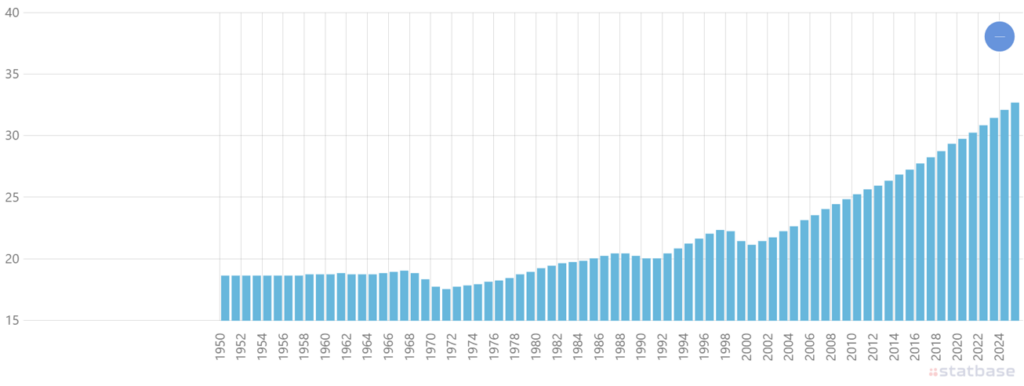
Figure 1. Average Age in Kosovo. Source: Statbase.[14]
North Macedonia’s population was estimated at 1,822,612 as of the end of 2024, amounting to a steady decrease of 5 percent since 2014. In the same year, 16,061 births were recorded compared to 20,201 deaths, resulting in a pronounced natural decrease, while fertility remains low at around 1.48 children per woman. Recent data show a slightly positive migration balance of 799, indicating that inflows have marginally exceeded outflows. However, this remains insufficient to neutralize broader demographic pressures. Meanwhile, the population is aging rapidly, with around 18 percent aged 65 and over, while the median age has surpassed 40 years.[15]
To understand the demographic crisis in the Western Balkans, it is necessary to look at three processes all at once. The first is the decline in births and persistently low fertility, which reduces population growth. The second is rapid aging, which increases mortality and reduces the share of future parents. The third is emigration, especially among young and working-age people, which accelerates the depopulation of local communities and further reduces future birth rates. When these three processes overlap, they create a self-reinforcing cycle in which demographic decline generates the conditions for further demographic decline. These trends are already reshaping the social and territorial structure of the region. Internal consequences for these countries include the depopulation of smaller towns and rural areas and the concentration of people in a few urban centers. Consequently, schools are losing students, local labor markets are shrinking, healthcare and social services are becoming harder to sustain, and the overall fiscal burden is falling on a steadily smaller number of working-age citizens that sustain the economy.
3. Why Does Talent Keep Leaving?
Given these deeply concerning trends, a key question emerges: why do people leave their home countries in large numbers and willingly become second-class citizens in foreign states? The most obvious answer would be money. However, while higher income and living standards certainly play a role in the decision to emigrate, there are many other, often overlooked, factors. As Hobbes’s Leviathan argues, states must first ensure security before pursuing economic progress.[16] In a similar way, individuals tend to prioritize safety over material prosperity. Along these lines, Aristotle’s Nicomachean Ethics emphasizes that “wealth is clearly not the good we are seeking,” suggesting that people are more likely to value security and freedom over material wealth alone.[17] Although perceptions of personal safety, such as walking freely in the streets, are often better than in some Western European countries,[18] the Western Balkans face a visible problem of organized crime and weak rule of law. There are frequent cases where institutions representing the law and justice fail to function effectively, which in turn generates a negative perception and lack of trust towards these institutions.[19]
For young people in the Western Balkans, security and material benefits are not enough, as they are also searching for a sense of purpose and a credible future. Unfortunately, people from lower social backgrounds do not have the same opportunities as those born into more privileged circumstances, who benefit from better access to resources and experience. While such disparities exist in more developed countries as well, the levels of nepotism and corruption—often tied to professional or personal advancement—is notably high and deeply embedded in everyday life in the Western Balkans.[20] This represents a systemic issue that is extremely difficult to eradicate.
Nepotism and corruption extend even into highly skilled sectors, such as healthcare and education. This creates a serious problem for a large part of the population that finances public institutions through taxes and other contributions yet often does not rely on their services. Many citizens are effectively forced to turn to private healthcare providers for everything from basic check-ups to complex surgical procedures due to the poor quality of service or lack of trust in the public system.[21] This, in turn, fuels dissatisfaction and further erodes trust. A similarly high level of distrust exists toward the education system, which has for more than a decade been associated with degree-purchasing fraud, primarily at private universities, but increasingly at public ones as well.[22] Such a labor market sidelines qualified and capable individuals while opening opportunities for those who advance using unethical or even illegal means. For these reasons, many people choose to leave, entering the unknown, learning new languages, and struggling with complex bureaucratic systems in search of better prospects and greater opportunities for personal and professional growth.
Beyond the individual level, demographic decline can be framed as a national security issue. Policy discussions within NATO have highlighted that shrinking and aging populations reduce the pool of military personnel and weaken economic resilience, which could limit states’ capacity to respond to crises.[23] Applying similar logic to the Western Balkans, where security remains sensitive, long-term depopulation could reduce state capacity, which may lead to increased dependence on external actors and consequently disrupt fragile regional stability.
4. When Integration Accelerates Departure
One of the paradoxes of EU accession from the perspective of Western Balkan countries lies precisely in the increased mobility of people, services, capital, and goods—one of the core principles of the European Union. There is a real possibility that accession could accelerate brain drain and, in turn, deepen the region’s demographic crisis. If people are able to move more freely and face fewer bureaucratic barriers when seeking employment in more developed EU economies, this could further incentivize young people to leave their home countries. While remittances to families who remain in the region would likely increase, increasing the inflow of money into Western Balkan economies, this would only partially offset the broader economic consequences of intensified emigration.
Emigration already increased following the introduction of visa-free travel from Western Balkan countries to the European Union.[24] The full removal of bureaucratic barriers would likely lead to an even sharper rise. This would directly benefit the European Union, however, which faces labor shortages driven by demographic challenges similar to those in the Balkans,[25] as EU countries also have aging populations, with the median age at nearly 45 years.[26]
Croatia provides a useful illustration of this paradox as the most recent country to join the European Union and one that shares many similarities with other Balkan states. From its accession in 2013 to 2023—a period of just one decade—around 389,000 people emigrated from the country.[27] For a country of roughly 3.8 million people, this is a significant loss. More recently, Croatia has recorded a positive migration balance since 2022, largely due to the import of labor from distant Asian countries such as Nepal, India, the Philippines, and Bangladesh.[28] This is a direct result of the abolition of the quota system for work permits in 2021, aimed at increasing the inflow of low-cost labor for low-skilled jobs (see Figure 2).[29]
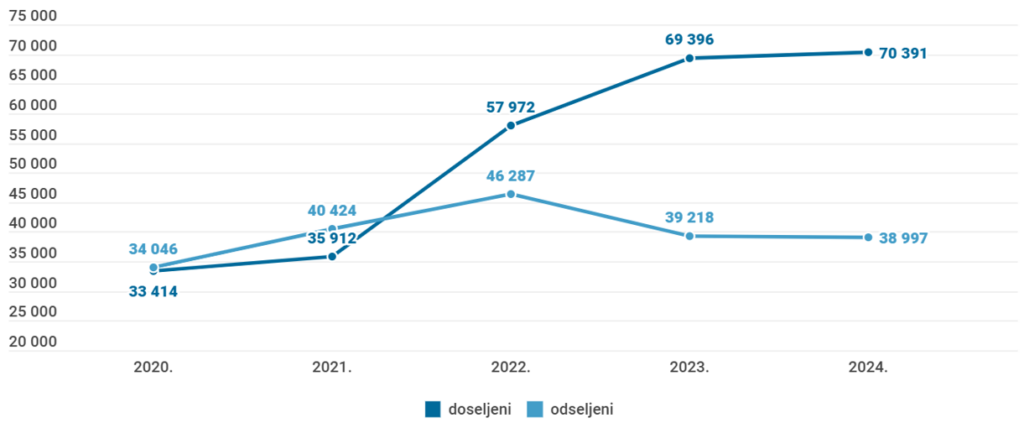
Figure 2. Immigration and Emigration in Croatia (2020–2024). Immigration is indicated in dark blue, and emigration is indicated in light blue. Source: Croatian Bureau of Statistics.[30]
Even in this case, where immigration exceeds emigration, long-term challenges that are not purely economic in nature may emerge. Croatia is currently benefiting economically from the import of low-cost labor, but, over time, it may face identity-related challenges linked to the integration of these migrant groups, for which there is no clear strategy.[31] The main policy focus has been on facilitating entry and employment, while integration is largely left to employers and local communities, an approach that has not proven particularly effective. In other words, while the policy may generate short-term economic gains, there is a longer-term risk of social and identity-related tensions.
At the same time, there are some positive signs that demographic trends could partially improve. In recent years, some Croatian citizens have been returning, primarily from Germany, a trend driven by improved living standards in their home country and a preference for raising families within a familiar cultural environment.[32] Estimates suggest that around 10,000 Croats return each year, which is a positive development, but still not sufficient to counterbalance the broader demographic pressures Croatia continues to face. If this trend of return among the Croatian diaspora continues, it can serve as a role model for all other Western Balkan countries facing persistent emigration and sizable diasporas. The Croatian case demonstrates that EU integration can produce contradictory demographic effects depending on the timeframe observed. In the short term, accession and labor mobility accelerated emigration from Croatia, especially among younger and skilled workers. However, over time, EU membership also contributed to institutional stabilization, higher living standards, improved infrastructure, and stronger economic prospects. These developments increasingly encourage return migration and improve long-term demographic resilience. Croatia therefore illustrates that European integration can simultaneously deepen demographic pressures in the short run while helping create conditions for demographic stabilization in the long run.
Nevertheless, the relationship between European integration and demographic decline is not entirely negative. While accession and mobility liberalization often accelerate emigration in the short term, the integration process can simultaneously strengthen institutional quality, legal predictability, and economic opportunities over the longer term. Croatia demonstrates this dual dynamic particularly clearly. Although EU accession contributed to large-scale outward migration during the first decade of the country’s membership, it also improved infrastructure, investment attractiveness, wages, and institutional stability. These changes have gradually made return migration more realistic for parts of the Croatian diaspora. In this sense, European integration may initially intensify demographic losses, but it can also create the structural conditions necessary for demographic recovery and long-term stabilization.
5. Economic Consequences of a Shrinking Workforce
Although the issue of brain drain is clearly visible in the Western Balkans, the problem goes deeper than that. Obvious consequences such as low natural increase are already concerning, but emigration takes the issue to another level. The outflow of young people, especially the highly educated, to Western European countries has both direct and indirect negative effects on national economies, especially in the long term. Primary, secondary, and, in most cases, higher education in Western Balkan countries is free of charge for citizens, meaning it is directly funded by the state. In most cases, young people spend all or most of their education in their home countries at the expense of the public budget, without any obligation to repay that investment, even indirectly by remaining in the country and contributing through taxes. Instead, they acquire education and skills domestically and then leave immediately after graduation for more developed economies where their professions are in demand, becoming taxpayers in those countries. Consequently, brain drain directly reduces the available workforce and creates a long-term fiscal burden for state budgets that cannot be recovered. Simply put, Western Balkan countries are exporting their future taxpayers, which makes their upbringing an unprofitable investment.
According to some estimates from 2019, emigration costs countries such as Montenegro, Albania, and North Macedonia up to 3 percent of their GDP.[33] This means that each Albanian citizen who emigrates may cost the state around €15,000, resulting in an annual loss of approximately €559 million. A citizen leaving Montenegro may cost the state over €21,000, leading to annual losses of around €70 million. In North Macedonia, annual losses due to emigration reach €333 million, with each emigrant representing a cost of roughly €16,000. Similar estimates have not been conducted for other Western Balkan countries, but it is reasonable to assume that the cost is even higher, given their larger economies and populations. Although remittances play an important role in these countries, the majority of these funds are spent on household consumption, while only a smaller share is directed toward business investment. As a result, their investment component remains underdeveloped, and despite their significant share in GDP, remittances have had a limited impact on overall economic growth and are not a reliable driver of future development.
Such studies, like many others, attempt to provide an approximate picture of the economic consequences of negative demographic trends, but determining the exact economic cost is extremely difficult—in fact, almost impossible—due to a range of variables, such as reduced production capacity, lower fiscal revenues, investment attractiveness, and many other indirect factors. The outflow of the working-age and qualified population reduces the supply of labor, limiting GDP growth potential and further widening the productivity gap between Western Balkan countries and more developed economies. In the meantime, while the number of taxpayers declines, expenditures on pension and healthcare systems increase, undermining the fiscal balance and placing additional pressure on the remaining workforce. In the long term, continuous population decline and a shortage of skilled workers reduce investor interest, as markets with limited labor supply and weaker demand carry higher risks and lower growth potential. Although some countries attempt to mitigate this problem by importing labor, such measures cannot compensate for the loss of domestic human capital—only temporarily delay the consequences. In this way, emigration represents one of the most serious risks to the overall economic system, creating a vicious cycle in which a weaker economy fuels new waves of population outflow.
6. Policies That Fail—and One That Could Work
Many governments, particularly those in the Western Balkans, see “putting money directly into citizens’ pockets” as a viable solution to low natural population growth. However, this is increasingly proving to be a misconception. Large-scale spending in the form of direct cash transfers to households has not produced tangible results. There are several reasons for this. While financial support is important for parents, especially young families, such measures are short-term in nature and increasingly used as a way to benefit from family support schemes rather than encourage long-term demographic change. In other words, certain groups, often from lower-income backgrounds, may be incentivized to have children for financial gain, rather than financial support serving its intended purpose of assisting parenting and boosting population growth.[34]
There are policy models that are more effective and have the potential to turn public spending into more tangible long-term results. The current Hungarian family policy model is a good example, offering strong support for young, working parents.[35] However, policies to boost fertility rates are not without precedent in Hungary. In the early 1950s, during the “Ratkó-era,” the state implemented highly restrictive pronatalist policies based on coercion, including almost a total ban on abortion and strict limitations on contraception.[36] While these measures led to a short-term increase in births, they created long-term social and structural distortions. Simply put, although numbers are rising, coercion does not benefit long-term demographic goals, as people tend to oppose coerciveness and value free will. That is why a smart approach lies in contemporary Hungarian family policy, which is supposed to incentivize individual choice to start or expand a family, rather than being pressured by the state to do so.
A key element of such a smart approach is employment. In Hungary, there are various forms of support for parents, especially young ones, who want to start a family while maintaining stable incomes, solve housing issues, and have their work-life balance guaranteed by Hungarian laws. One of the most important measures is support for employed mothers. In Hungary, mothers with three or more children are exempt from paying personal income tax for life. The same applies to mothers under 40 with two children and mothers under 30 with one child. When combined with the personal income tax exemption for individuals under 25, introduced in 2022, this creates a continuous tax-free pathway for employed women who choose to have children. In addition, mothers are entitled to maternity and parental leave for a total of three years, with income compensation provided during the first two years through benefits known as CSED and GYED. These measures help reduce both the financial and psychological barriers associated with deciding to have children. Alongside tax exemptions for mothers, fathers are also eligible for income tax reductions depending on the number of children. Families can receive annual tax refunds amounting to several thousand euros, easing the financial burden of parenthood. Beyond tax incentives, the Hungarian government offers subsidized cash loans, as well as favorable loans for housing and at some point, even offered subsidized car purchases for large families.[37]
This structure of support provides substantial benefits but also requires employment and active participation in the economy, ensuring an immediate economic return on what is essentially a long-term demographic investment, unlike the simple cash transfers commonly used in Western Balkan countries. However, financial support alone is not sufficient. A well-developed infrastructure of childcare and education services, along with improving their accessibility, is equally important. Compared to 2010, nursery capacity in Hungary has more than doubled, with the number of places increasing from 32,500 to 71,000 nationwide. The number of settlements with childcare facilities has also grown significantly, from 326 in 2010 to 1,260 today.[38] Hungary allocates around 5 percent of its GDP annually to family policy, underscoring the urgency and importance it places on addressing demographic challenges through such measures rather than immigration from less developed regions. In doing so, Hungary strengthens its national and family policy while avoiding some of the potential short- and long-term challenges associated with large-scale immigration.
While these policies have not been sufficient to significantly raise fertility rates, they have helped to slow down negative demographic trends. Hungary’s fertility rate increased from around 1.2 in 2010 to 1.6 in 2021, the highest level recorded since 1994.[39] Nevertheless, due to domestic economic difficulties, the energy crisis triggered by conflicts worldwide, and the overall political and institutional struggle in Hungary, the fertility rate has dropped since the peak in 2021, falling to 1.3 in 2025.[40]
Alongside financial support for families through various government programs and the development of the necessary childcare and education infrastructure, it is also essential to address factors that are often overlooked but decisive when it comes to people staying in their home countries. Such factors concern the growing social polarization across the region in recent years. Political actors, often using the media for short-term political gains, have contributed to increasing divisions, which in turn fuel a sense of insecurity and weaken people’s sense of belonging. As everyday life becomes increasingly politicized, distrust and skepticism toward state institutions increase. Rebuilding public trust in institutions is therefore a key condition, both for encouraging people to remain in their home countries and for supporting higher birth rates.
Data from the 2025 Balkan Barometer on public trust show that people across the region largely do not trust the very institutions that are supposed to serve their interests (see Figure 3).[41]
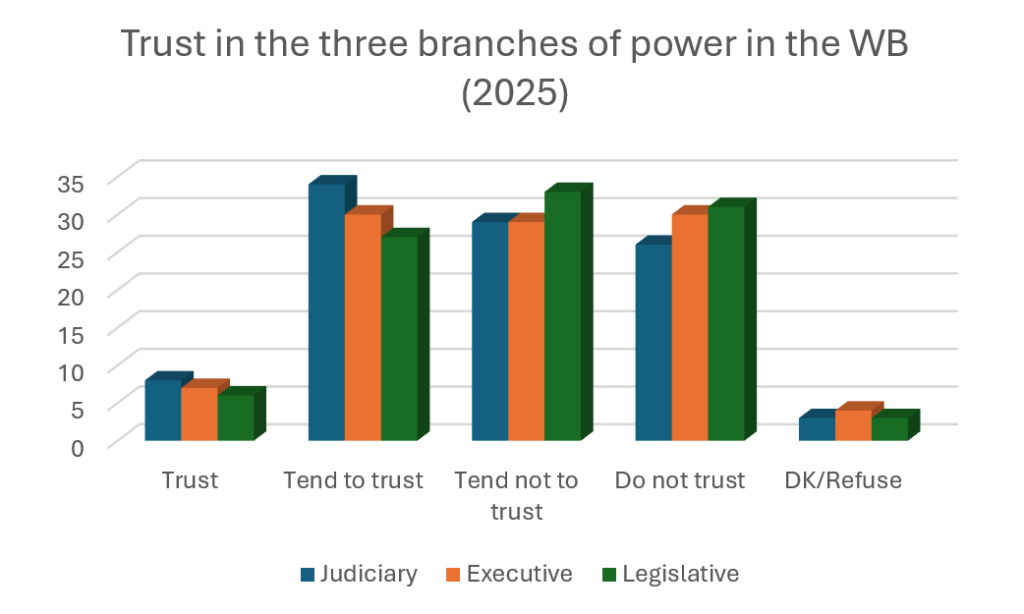
Figure 3. Trust in the Three Branches of Power in the Western Balkans (2025). Source: Balkan Barometer.[42]
In such a context, where trust in institutions is weakened, social polarization is on the rise, and media are used as tools of political struggle rather than sources of information, young people struggle to see a long-term future for themselves, even when financial support is available, and often choose to emigrate. Reversing this trend is never simple, as it largely depends on political will. Paradoxically, that political will is often lacking, since the same political actors contributing to the problem tend to prioritize short-term political gains over long-term stability. Still, there is room for a more optimistic outlook. Trust in institutions can be gradually rebuilt through responsible media engagement and civic education on political processes, helping to foster a more politically mature society. Without such a shift, and without restoring confidence in public institutions, emigration is likely to continue at high levels. In that scenario, even an increase in fertility rates would not be enough to preserve long-term demographic stability.
One ethically questionable but principally acceptable solution for this issue may be selective immigration policies. For example, since the beginning of the full-scale Russo-Ukrainian war in 2022, more than 370,000 Russians have emigrated to Serbia.[43] That Serbia is such a preferred destination for many Russians should not come as a surprise, given the cultural, religious, linguistic, and other similarities between the two countries. At the same time, Russians are politically acceptable in Serbia due to the country’s politically non-aligned position compared to other European states. However, such advantages come at a price—assimilation. Russian emigration in Serbia has been subject to assimilation, as parts of the interwar diaspora integrated into the majority society over time.[44] When two cultures are so similar, it is very difficult to avoid full assimilation. Selective immigration has positive outcomes visible even in the short term, as Russian immigrants consist mostly of young families with children, benefiting the Serbian demographic outlook.[45]
7. Conclusion
The demographic crisis in the Western Balkans represents a deep and structural problem that goes beyond the scope of traditional social policy and directly affects the long-term sustainability of states. As shown throughout this paper, declining birth rates, rapid population aging, and continuous emigration do not operate as separate processes, but as interconnected dynamics that together create a demographic spiral. The consequences are not merely statistical, but are rather reflected in a weakening labor force, rising fiscal pressures, and a decline in overall economic potential. Particularly concerning is the fact that emigration, as the most dynamic component, is removing precisely those segments of the population that are essential for future development—young, educated, and working-age individuals. In this way, countries in the region are losing their future alongside the loss of their population, with increasing economic costs.
At the same time, the paper does not suggest that European integration itself is the root cause of demographic decline. Rather, integration interacts with already existing structural weaknesses in the Western Balkans. Increased mobility exposes institutional deficiencies and accelerates outward migration in the short term, but the integration process can also serve as a framework for institutional reform, economic modernization, and improved governance. In the long run, these factors may become essential for slowing emigration, rebuilding public trust, and creating the conditions under which parts of the diaspora may choose to return.
The analysis further shows that existing policies are not sufficient to reverse negative trends. One-off financial measures and short-term population policies cannot address the complexity of the underlying causes driving emigration and low birth rates. The core of the problem lies in a broader social and institutional context: a lack of trust in institutions, limited economic prospects, and a sense of insecurity that encourages people to leave. Bearing this in mind, family-friendly policies must be closely linked with economic and institutional reform, as without a stable and predictable environment, there will be no meaningful effect on population growth.
If current negative demographic trends persist, demographic decline in the Western Balkans will become self-sustaining, gradually eroding economic capacity and, ultimately, the viability of states in the region. However, this matters beyond the region as well. At a time when many European countries are experiencing similar demographic pressures, the Western Balkan countries are helping to address labor shortages. Nevertheless, if the region continues to lose its population at this pace, its capacity to play that role will be weakened, while internal pressures in the region may grow. From this perspective, if not properly addressed, the consequences of the demographic crisis in the region will be felt across the European Union and will no longer be able to be ignored. However, until that happens, demographic decline will—slowly but gradually—remain a silent threat, with long-term implications for European societies and the civilization they are built upon.
Endnotes
[1] Eurostat, “Fertility Statistics,” European Commission, March 7, 2025, https://ec.europa.eu/eurostat/statistics-explained/index.php?title=Fertility_statistics.
[2] Statistical Office of the Republic of Serbia, “Vitalni događaji, 2024” [Vital Events, 2024], July 1, 2025, https://publikacije.stat.gov.rs/G2025/HtmlL/G20251174.html.
[3] More deaths than births.
[4] “Srbija od 1991. izgubila skoro milion stanovnika, među kojima skoro 30 odsto inženjera” [Serbia Has Lost Almost a Million Inhabitants since 1991, Including Nearly 30 Percent of Its Engineers], Radio Television of Serbia, March 3, 2026, https://www.rtv.rs/sr_lat/ekonomija/srbija-od-1991.-izgubila-skoro-milion-stanovnika-medju-kojima-skoro-30-odsto-inzenjera_1696364.html.
[5] Vesna Ćužić, et al., Demography 2024 (Agency for Statistics of Bosnia and Herzegovina, 2025), https://bhas.gov.ba/data/Publikacije/Bilteni/2025/DEM_00_2024_TB_1_HR.pdf.
[6] Fertility rate estimates vary significantly. Other credible sources, such as the World Bank, report a fertility rate of 1.5, which represents a substantial discrepancy. The author relies on official state statistics in order to ensure consistency in the paper’s methodology.
[7] Institute of Statistics, “Population of Albania on 1st January 2025,” June 12, 2025, https://www.instat.gov.al/en/themes/demography-and-social-indicators/population/publication/2025/population-of-albania-on-1st-january-2025/.
[8] Katharina Buchholz, “The Countries with the Most People Living Overseas,” Statista, November 22, 2022, https://www.statista.com/chart/4237/the-countries-with-the-most-people-living-overseas/.
[9] Statistical Office of Montenegro, Population Estimates and Main Demographic Indicators 2024 (Statistical Office of Montenegro, 2025), https://www.monstat.org/uploads/files/demografija/osnovni%20demografski%20pokazatelji/2024/Population%20estimates%20and%20main%20demographic%20indicators_2024.pdf.
[10] Paulina Wankiewicz-Kłoczko, “The Vanishing Balkans: The Region’s Demographic Crisis,” Centre for Eastern Studies, March 5, 2025, https://www.osw.waw.pl/en/publikacje/osw-commentary/2025-03-05/vanishing-balkans-regions-demographic-crisis.
[11] Statistical Office of Kosovo, “Average Age of Population,” accessed March 18, 2026, https://statbase.org/data/xkx-median-age/.
[12] Statistical Office of the Republic of Serbia, “Starost i pol” [Age and Gender], May 25, 2023, https://www.stat.gov.rs/sr-latn/vesti/20230525-starost-i-pol/.
[13] Kosovo Agency of Statistics, Population and Housing Census 2024 – Preliminary Results (Kosovo Agency of Statistics, 2025), https://askapi.rks-gov.net/Custom/0e21347f-019f-49fb-af12-e7856c6741c8.pdf.
[14] “Average Age of Population,” Statbase, accessed March 18, 2026, https://statbase.org/data/xkx-median-age/.
[15] Republic of North Macedonia State Statistical Office, “North Macedonia in figures, 2025,” accessed April 16, 2026, https://www.stat.mk/media/ou0nchu2/makedonija-vo-brojki-2025-en-web.pdf.
[16] Thomas Hobbes, Leviathan (Project Gutenberg, 2002), https://www.gutenberg.org/ebooks/3207.
[17] Aristotle, The Nicomachean Ethics (Project Gutenberg, 2001), https://www.gutenberg.org/files/8438/8438-h/8438-h.htm.
[18] Numbeo, “Crime Index by City 2026,” accessed March 18, 2026, https://www.numbeo.com/crime/region_rankings.jsp?title=2026®ion=150&displayColumn=1.
[19] Regional Cooperation Council, “Balkan Barometer – Public Opinion Database,” accessed March 18, 2026, https://www.rcc.int/balkanbarometer/results/2/public.
[20] Armin Aljović, “Korupcija, mito i nepotizam postali sastavni dio kulture na Zapadnom Balkanu” [Corruption, Bribery, and Nepotism Have Become an Integral Part of the Culture in the Western Balkans], Al Jazeera Balkans, May 4, 2021, https://balkans.aljazeera.net/teme/2021/5/4/umjesto-nulte-tolerancije-protiv-korupciji-na-balkanu-postoji-tolerancija-na-korupciju.
[21] Lana Avakumović, “Zašto plaćamo državi, a lečimo se kod privatnika?” [Why Do We Pay the State, but Get Treated by a Private Doctor?], Biznis i finansije, August 26, 2020, https://bif.rs/2020/08/zasto-placamo-drzavi-a-lecimo-se-kod-privatnika/.
[22] Mario Pejović, “Cvjeta prodaja i plagiranje diploma na Balkanu” [Sales and Diploma Plagiarism Are Booming in the Balkans], Al Jazeera Balkans, November 14, 2014, https://balkans.aljazeera.net/teme/2014/11/14/cvjeta-prodaja-i-plagiranje-diploma-na-balkanu.
[23] Eric Palomaa, “Older and Wiser: Defining NATO’s Strategy for Global Aging,” Center for Strategic and International Studies, July 12, 2024, https://www.csis.org/analysis/older-and-wiser-defining-natos-strategy-global-aging.
[24] Raül Hernández i Sagrera, The Impact of Visa Liberalisation in Eastern Partnership Countries, Russia and Turkey on Trans-Border Mobility, CEPS Papers in Liberty and Security in Europe no. 63 (Centre for European Policy Studies, 2014), https://cdn.ceps.eu/wp-content/uploads/2014/08/No%2063%20EU%20Visa%20Liberalisation.pdf.
[25] “Europe Faces Demographic Decline and Labor Shortages Beyond Our Country,” Hungary Today, March 17, 2026, https://hungarytoday.hu/europe-faces-demographic-decline-and-labor-shortages-beyond-our-country/.
[26] Eurostat, “Population Structure and Ageing,” European Commission, February 2025, https://ec.europa.eu/eurostat/statistics-explained/index.php?title=Population_structure_and_ageing.
[27] Croatian Bureau of Statistics, “Migracija stanovništva” [Population Migration], accessed March 18, 2026, https://podaci.dzs.hr/hr/podaci/stanovnistvo/migracija-stanovnistva.
[28] “Objavljeni rezultati prvog istraživanja o stranim radnicima u Hrvatskoj” [Results of the First Survey on Foreign Workers in Croatia Published], Index.hr, January 14, 2025, https://www.index.hr/vijesti/clanak/objavljeni-rezultati-prvog-istrazivanja-o-stranim-radnicima-u-hrvatskoj/2632762.aspx.
[29] Duško Jaramaz, “Poslodavci će 2021. slobodno zapošljavati strane radnike” [In 2021, Employers Will Be Free to Hire Foreign Workers], tportal, November 6, 2020, https://www.tportal.hr/biznis/clanak/poslodavci-ce-2021-slobodno-zaposljavati-strane-radnike-20201106.
[30] Croatian Bureau of Statistics, “Population,” accessed March 18, 2026, https://web.dzs.hr/hub25/stanovnistvo.html.
[31] Hrvoje Butković, Višnja Samardžija, and Ivana Rukavina, Strani radnici u Hrvatskoj: izazovi i mogućnosti za gospodarski i društveni razvoj [Foreign Workers in Croatia: Challenges and Opportunities for Economic and Social Development] (Institute for Development and International Relations, 2022), https://irmo.hr/wp-content/uploads/2022/03/Strani-radnici-u-Hrvatskoj.pdf.
[32] Katarina Dimitrijević Hrnjkaš, “Zašto se Hrvati vraćaju kući? Demograf Tado Jurić objašnjava novi migracijski trend” [Why Are Croats Returning Home? Demographer Tado Jurić Explains the New Migration Trend], Net.hr, March 15, 2026, https://net.hr/danas/vijesti/zasto-se-hrvati-vracaju-kuci-demograf-tado-juric-objasnjava-novi-migracijski-trend-773f9d1c-1941-11f1-936f-9600040c8f8e.
[33] Westminster Foundation for Democracy, “The Cost of Youth Emigration in the Western Balkans,” October 24, 2019, https://www.wfd.org/what-we-do/resources/cost-youth-emigration-western-balkans.
[34] Jelena Čvorović, “The Associations of Cash Transfers with Parental Investment and Couples’ Fertility among Low-Income Serbian Roma,” Evolutionary Human Sciences 70, no. 1 (2025): 38–56, https://pubmed.ncbi.nlm.nih.gov/39945654/.
[35] Hungarian Government, “Family Allowances,” accessed March 19, 2026, https://www.safeinhungary.gov.hu/en/family/family-care/.
[36] Judit Barna, “Baby Boom and Epidemics: Polio and Pro-Natalism in Hungary,” CEEHM Network, April 23, 2013, https://ceehmnetwork.wordpress.com/2013/04/23/baby-boom-and-epidemics-polio-and-pro-natalism-in-hungary.
[37] Hungarian State Treasury, “Support for Car Purchase for Large Families,” accessed April 16, 2026, https://www.allamkincstar.gov.hu/csaladok-tamogatasa/Csalad_gyermek/nagycsaladosok-autovasarlasi-tamogatasa.
[38] Hungarian Government, “Koncz Zsófia: ismét lehet pályázni munkahelyi bölcsődék létrehozására” [Zsófia Koncz: Applications for the Establishment of Workplace Daycare Centers Are Once Again Being Accepted], February 2, 2026, https://kormany.hu/kormanyzat/kulturalis-es-innovacios-miniszterium/hirek/koncz-zsofia-ismet-lehet-palyazni-munkahelyi-bolcsodek-letrehozasara.
[39] Hungarian Central Statistical Office, “Live Births and Total Fertility Rate,” accessed March 18, 2026, https://www.ksh.hu/stadat_files/nep/en/nep0006.html
[40] “Survey Sheds Light on Factors behind Lower Birth Rate,” Hungary Today, 2025. mart 25., https://hungarytoday.hu/survey-sheds-light-on-factors-behind-lower-birth-rate/
[41] Regional Cooperation Council, “Balkan Barometer – Public Opinion Database,” accessed March 18, 2026, https://www.rcc.int/balkanbarometer/results/2/public
[42] Regional Cooperation Council, “Balkan Barometer – Public Opinion Database,” accessed May 25, 2026, https://www.rcc.int/balkanbarometer/results/2/public.
[43]Georgijevski Jovana, “Rusi u Srbiji: Kako žive danas, tri godine od početka rata u Ukrajini” [Russians in Serbia: How They Live Today, Three Years after the Start of the War in Ukraine], BBC, March 5, 2025, https://www.bbc.com/serbian/articles/cy4llj8zp2po/lat.
[44] Đoko Kesić, “Rusi u Srbiji: Prve smo prigrlili, novi su dobrodošli” [Russians in Serbia: We Embraced the First, the New Are Welcome], Ekspres, December 6, 2023, https://www.ekspres.net/vesti/rusi-u-srbiji-ukrajinci-u-srbiji-emigracija-rusa-u-srbiju-6-12-2023.
[45] Oxford Analytica, “New Russian Immigrants Bring Benefits to Serbia,” Expert Briefings (2023), https://www.emerald.com/expert-briefings/article/doi/10.1108/OXAN-DB276324/478349.