
How Much Economic Pain Have the Russian Sanctions Caused Europe?

HIIA Perspective – Written by Philip Pilkington
The PDF version is available here!
Since the beginning of the war in Ukraine, the European Union has undertaken aggressive economic sanctions against Russia. The stated goal of these sanctions was to “reinforce pressure on the Russian government and economy, and to limit the Kremlin’s resources for the aggression.”[1] The sanctions have not worked to pressure Russia. Its war economy has proven robust enough to continue war production, and its consumer economy has also held up relatively well. This reality has become increasingly recognized over time, and there is now a broad consensus that the Russian sanctions have failed to achieve their goals.[2]
Less attention has been paid, however, to the impact that the sanctions have had on Europe. Over time, Europe has largely cut itself off from access to cheap Russian energy, especially Russian gas. It has substituted this energy by buying more expensive LNG.[3] This has led to a rise in energy prices across the continent, which in turn has triggered a rolling cost-of-living crisis in many countries. Recent polling shows that 20 percent of European citizens struggle to heat their homes, and 25 percent struggle to pay their utility bills on time.[4] This is a tragedy and represents a fundamental decline in the quality of life in Europe. But what is far less studied is how much of an impact the energy sanctions are having on the European economy.
The Russian government has been putting out estimates of the damage done to the European economy by the sanctions for several years.[5] They estimate that the sanctions have caused the European economy between $1 trillion and $2 trillion, but they have failed to produce a serious methodology for how they arrived at these figures. European energy prices for non-household users are now two and a half times higher than in the United States. Gas prices are now five times higher than in the United States. This dramatically impacts the ability of European industry to remain competitive. The following chart shows the evolution of electricity prices for European industry in the past few years.
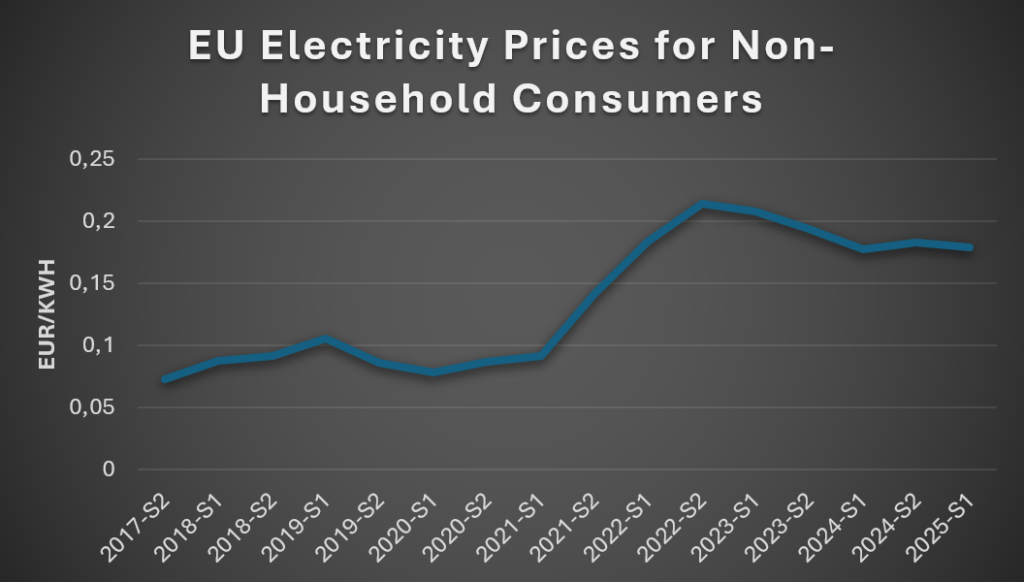
Figure 1. EU Electricity Prices for Non-Household Consumers. Visualization by the author using data from Eurostat.
As we can see, the price of electricity for European businesses has more than doubled. There is extensive literature estimating the impact that high energy prices have on industry. A recent paper published by the European Central Bank estimates that for every 10 percent increase in electricity prices, employment in the manufacturing sector falls by 1–2 percent in the short run and 6–7 percent in the long run.[6] These estimates allow us to provide transparent calculations for how severely the energy sanctions on Russia have impacted the European economy.
First, let us say something about the short-run and long-run estimates. Short-run estimates can best be thought of as the effect that energy sanctions have already had on the economy. That is, our short-run results show roughly the impact that the high energy prices have already had in the last four years. Long-run estimates can be thought of as the effect that energy sanctions will have if they remain in place over the next six to eight years—so, the effect that the sanctions will have if they remain in place between now and 2032–2034.
The following chart shows the short- and long-run impact of the energy sanctions on employment. Overall job losses in Europe from Russian energy sanctions are estimated to be 5.4 million in the short run and 32.3 million in the long run. As we can see, the impact on the services sector is even more severe than on the manufacturing sector. This is because studies show that the manufacturing sector “props up” jobs in the services sector by providing demand for services.[7]
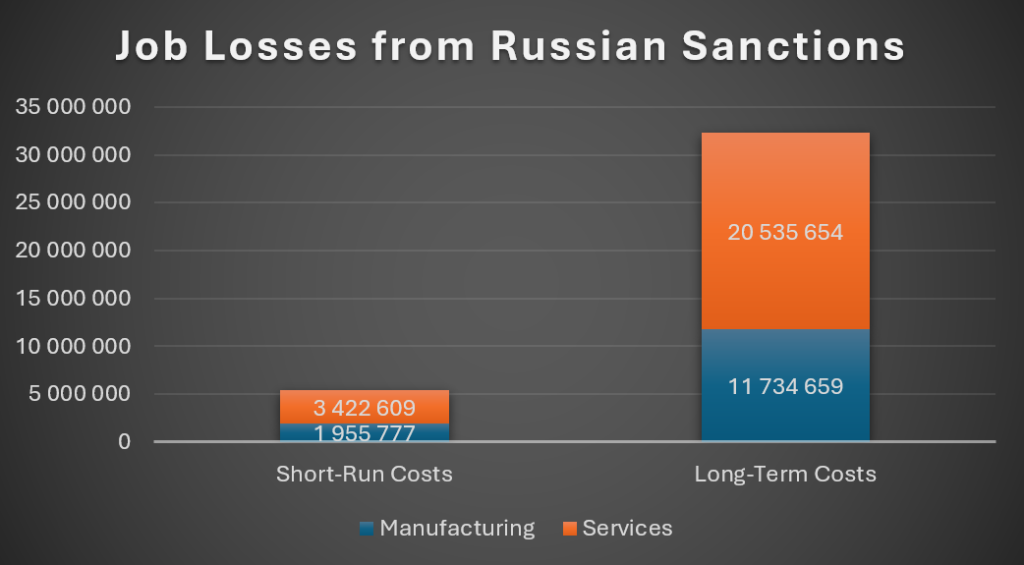
Figure 2. Job Losses from Russian Sanctions. Visualization by the author using data from Eurostat.
Next, we can estimate the losses in terms of GDP. These estimates are shown in the following chart. The impact on European GDP in the short run is estimated to be €388.9 billion, and in the long run it is estimated to be €2.24 trillion.[8] This means that European GDP has shrunk by around 2.05 percent in the short run due to the sanctions and will shrink by 11.8 percent in the long run due to the sanctions. Needless to say, this means that, especially in the long run, the energy sanctions are a major threat to European living standards. These results vindicate the notion that the European economy may be going through a process of deindustrialization.[9]
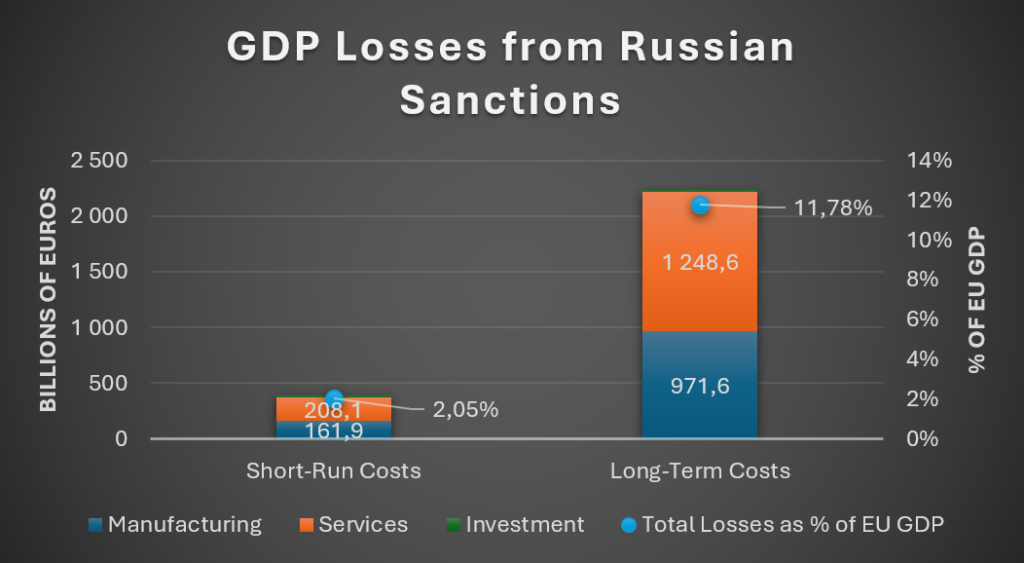
Figure 3. GDP Losses from Russian Sanctions. Visualization by the author using data from Eurostat.
Finally, it is instructive to test our model against trends in European employment. This is instructive for two reasons. First of all, it acts as a “sanity check” on the model to see if it is producing extreme outcomes and therefore might be overestimating the employment and, therefore, GDP losses. Below are two charts that contain actual employment data for manufacturing and for overall employment, a trend estimate from before employment started to sink after the pandemic and then after the war, and finally a counterfactual based on our model that shows how employment would have developed if the sanctions had never been put in place. What we see is remarkable: If the European Union had not enacted sanctions on Russia, both manufacturing and overall employment would have returned to trend, and the European economy would have continued growing normally. This means that the current stagnation that we see in the European economy is exclusively due to the sanctions on Russia and lack of access to cheap energy.
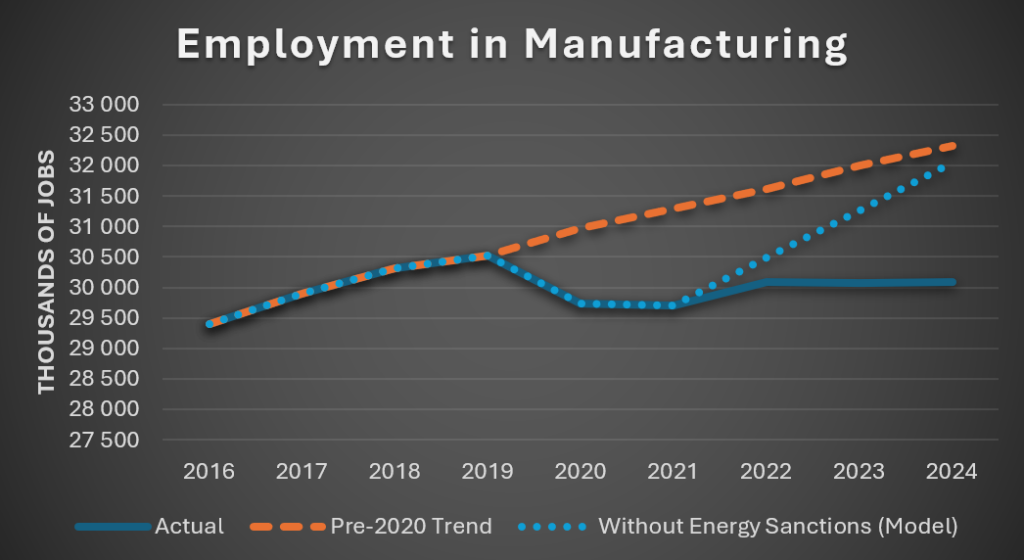
Figure 4. Employment in Manufacturing. Visualization by the author using data from Eurostat.
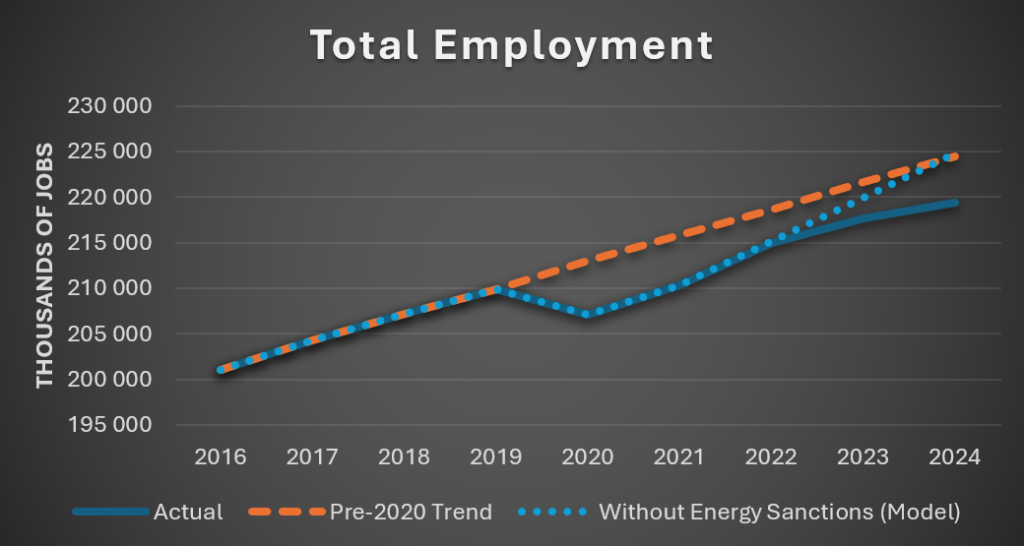
Figure 5. Total Employment. Visualization by the author using data from Eurostat.
All the evidence suggests that the impact of the sanctions on Russia on the European economy have been severe. It has caused extensive job losses and led to lower GDP. If these sanctions are kept in place, they will shrink the European economy by nearly 12 percent. This will drastically lower the standards of living in Europe. Meanwhile, these sanctions are having a minimal impact on Russia and are allowing Europe’s rivals like China access to extensive supplies of cheap energy. In short, the sanctions are a remarkable and likely historically unprecedented act of economic self-harm.
Endnotes
[1] Council of the EU, “EU Adopts Fifth Round of Sanctions against Russia over Its Military Aggression against Ukraine,” Consilium, April 8, 2022, https://www.consilium.europa.eu/en/press/press-releases/2022/04/08/eu-adopts-fifth-round-of-sanctions-against-russia-over-its-military-aggression-against-ukraine/.
[2] Sergey Sosnovskikh et al., “Sanctions Rarely Achieve Their Goals – Here’s Why They Failed in Russia and Myanmar,” The Conversation, February 24, 2025, https://theconversation.com/sanctions-rarely-achieve-their-goals-heres-why-they-failed-in-russia-and-myanmar-244975.
[3] Ugnė Keliauskaitė et al., “European Natural Gas Imports,” Bruegel, February 6, 2026, https://www.bruegel.org/dataset/european-natural-gas-imports.
[4] Századvég, “Brussels is Pushing Europe into an Energy Crisis – Hungary is Standing Up to It,” February 11, 2026, https://szazadveg.hu/en/cikkek/brussels-is-pushing-europe-into-an-energy-crisis-hungary-is-standing-up-to-it/.
[5] RT, “Cutting Russia Ties Has Cost EU €1 Trillion – Moscow,” August 4, 2025, https://www.rt.com/news/622450-eu-lost-trillion-russia-energy-trade-ties.
[6] Gert Bijnens et al., “The Interplay between Green Policy, Electricity Prices, Financial Constraints and Jobs: Firm-Level Evidence,” European Central Bank, April 2021, https://www.ecb.europa.eu/pub/pdf/scpwps/ecb.wp2537~002be51914.en.pdf.
[7] Bijnens et al., “The Interplay”; A conservative coefficient here is around 1.75.
[8] This is in the same ballpark as the latest Russian figures (€1.5–2 trillion). These were likely long-run estimates, not short-run estimates.
[9] Henryk Kaliś et al., “The Menace of Deindustrialization in the EU—and What We Can Do about It,” Politico, February 10, 2025, https://www.politico.eu/sponsored-content/the-menace-of-deindustrialization-in-the-eu-and-what-we-can-do-about-it/.