
From Catch-Up to Command: China’s 15th Five-Year Plan and the Strategic Turn toward Technological Sovereignty

HIIA Analysis – Written by Ruslan Bortnik & Gergely Salát
The 2026 “Two Sessions” of the National People’s Congress and the Chinese People’s Political Consultative Conference marked a defining institutional moment in China’s development trajectory. The approval of the 15th Five-Year Plan (2026–2030) formalized a fundamental reorientation of Beijing’s development logic: away from maximizing economic growth toward building a self-sufficient system anchored in technological sovereignty, social resilience, and civil-military integration. This article analyzes the key political and economic signals of the 2026 sessions, situates the new plan within the long-term evolution of China’s five-year planning cycles, and examines how its decisions connect to the strategic horizon of 2035. We argue that the institutionalization of “new quality productive forces”—spanning artificial intelligence, quantum technologies, semiconductors, and green energy—represents not merely a policy shift but a structural transformation of China’s modernization architecture. The state is transitioning from a facilitator of market-driven growth to a centralized coordinator of strategic technological ecosystems. Macroeconomic targets are recalibrated toward resilience rather than speed, while the integration of civilian and defense sectors deepens. Externally, China is consolidating a model of selective openness designed to create asymmetric interdependence with global partners. Taken together, the 15th Five-Year Plan signals China’s definitive move from catch-up development to managed technological leadership—with significant implications for the global economic and security order.
The PDF version is available here!
Introduction
Growing technological competition, the strengthening of sanctions, tariff wars, and the increasing fragmentation of the global economy are creating a more challenging external environment for China, in which economic strategy is increasingly intertwined with issues of security and geopolitical positioning. The United States and, more broadly, Western economies play a key role in these processes, consistently expanding technological restrictions, supply chain controls, and sanctions pressure. In response, Beijing is forced to adapt its development model, strengthening the governance of economic processes, increasing the predictability of macroeconomic policy, and balancing budget and investment priorities in the face of external instability, while adhering to the normative pillars of Chinese economic policy.[1]
It was in this context that the March session of China’s National People’s Congress adopted the 141-page document titled “Draft of the 15th Five-Year Plan for National Economic and Social Development of the People’s Republic of China,” which is intended to guide the country’s development in the period between 2026 and 2030. The draft—of which only the Chinese-language version has officially been published so far,[2] although an unofficial translation has already appeared[3]—will hereinafter be referred to as the “Five-Year Plan.”[4] It should be noted, however, that this draft will be supplemented by various local and sectoral programs, causing the overall document to swell to several thousand pages. The plan was elaborated in accordance with the recommendations adopted by the Central Committee of the Chinese Communist Party (CCP) last autumn,[5] which were themselves grounded in the resolutions of the Party’s 20th Congress (2022) and the subsequent plenums. The most important feature of the Five-Year Plan is that it consolidates the transition from an extensive growth model to a more complex paradigm of “high-quality development” (高质量发展) (Ch. 2, Sec. 2).[6]
The 2026 Two Sessions of the National People’s Congress and the Chinese People’s Political Consultative Conference meetings were distinguished by their combination of two agenda levels: summing up the results of the previous planning cycle and setting the parameters for the next. This gave them the character of a transitional moment, where short-term macroeconomic stabilization was integrated into a long-term transformation model. Of particular importance is the institutionalization of the concept of “new quality productive forces,” proposed in 2023.[7] It provides a framework for rethinking the sources of growth, shifting the emphasis to technological and scientific factors.
In China’s institutional logic, the “two sessions” serve not only as legislative and consultative mechanisms but also as instruments of strategic coordination. They help formulate long-term development guidelines, align the interests of various levels of government, and convey signals to external partners. At the same time, the “two sessions” play another important role: they serve as a mechanism for synchronizing political, economic, and technological priorities, enabling the centralized redistribution of resources in favor of strategic sectors. Essentially, China is striving to strengthen its independent internal resilience, building it in key areas—technological, economic, social, energy, and defense. This model combines the development of a future economy, social balance, the integration of civilian and military technologies, and centralized governance into a single system.[8]
This is especially important in the context of increasing external competition and limited access to technology. In essence, this represents a shift in China’s development logic: from the accumulation of production factors to the management of knowledge, technology, and innovation ecosystems as primary sources of competitiveness.
The relevance of analyzing the Fifteenth Five-Year Plan is determined by its role as a benchmark for China’s transition to a new economic development model based on technological resilience, internal balance, and control over critical value chains. In this context, the plan serves as an instrument for the structural adaptation of the Chinese economy to a changing geoeconomic environment characterized by increasing competition, limited access to technology, and the redistribution of global markets. The decisions adopted reflect the interconnectedness of domestic economic policy and foreign policy strategy, allowing us to assess how China is rethinking its position in relations with the United States, Europe, and the countries of the Global South.
The purpose of this study is to identify the key directions and objectives formulated in the Fifteenth Five-Year Plan, compare them with previous planning cycles, and analyze the macroeconomic and political signals transmitted. This approach allows us to assess how China is adapting its development model to the changing geoeconomic environment and what priorities determine the trajectory of its modernization in the medium term.
The 15th Five-Year Plan (2026–2030): Structure, Priorities, and Key Policy Decisions
In China’s public administration system, five-year plans are key strategic planning tools, defining priorities for economic policy, industrial transformation, and social development. The draft 15th Five-Year Plan effectively sets the direction of fiscal, technological, and social policy through 2030.
By the end of the 14th Five-Year Plan, China’s economy exceeded 140 trillion yuan (approximately $20 trillion), and key indicators—economic growth, labor productivity, research and development expenditures, urbanization, and life expectancy—generally met or exceeded planned targets.[9] At the same time, the current stage of development is characterized by a growing complexity of both the external and internal environments. Externally, trade restrictions, geopolitical tensions, and a slowdown in global growth are intensifying, while domestically, structural imbalances persist and the pressure of technological challenges is growing.
The “Two Sessions” held in March 2026 in Beijing became the institutional focal point for consolidating a new stage of China’s economic and governance transformation. The newly approved “15th Five-Year Plan” (2026–2030) sets the parameters for the transition to a development model that prioritizes technological sustainability, internal balance, and control over critical economic sectors.[10] The document, comprising 18 sections and 62 chapters, is structured as a comprehensive strategic framework encompassing key areas of the country’s modernization. The initial sections formulate general principles and development goals, including strategic guidelines through 2035. The focus then shifts to the economic block, which defines the objectives of industrial transformation, innovation development, and strengthening technological potential. Separate chapters are devoted to social issues of employment, education, demographic change, and improving the quality of life of the population. A significant portion of the document is devoted to issues of security and sustainability: energy, food, and technological security are considered, as well as risk management mechanisms in the face of external pressure. At the same time, the directions of ecological transformation and “green” development are explored, integrating them into the overall modernization model. The final sections focus on the institutional mechanisms for implementing the plan, including improving public administration, reforming the financial system, and coordinating regional development.
Taken together, the document’s structure demonstrates China’s desire to build a holistic development model in which economic, social, and technological objectives are integrated into a single, manageable system.
Central to China’s new agenda is the concept of “new quality productive forces” (新质生产力), institutionalized through a system of megaprojects aimed at introducing advanced technologies—artificial intelligence, quantum solutions, and semiconductors—into production chains.[11] The emphasis is not only on technological modernization but also on the integration of the civilian and defense sectors, reflecting the growing interconnectedness between economic development and national security objectives (Ch. 5, Sec. 1–2; Ch. 8, Sec. 1–2; Ch. 56).
From an institutional perspective, the decisions adopted mark a shift from a fragmented market-driven growth model to a more centralized development management system focused on technological sovereignty. The new architecture combines strategic coordination at the state level with the preservation of regional initiatives and mechanisms for stimulating innovation.
Macroeconomic benchmarks also demonstrate a shift in performance criteria. A significant portion of the five-year plan’s indicators are related to social and demographic sustainability—employment, education, and support for the aging population—reflecting a shift away from a narrow focus on growth rates. The plan itself does not even contain a concrete GDP target, instead, according to the plan, the target will be set year by year “within a reasonable range” (4.5–5 percent in 2026). This clearly demonstrates that China intends to pursue a flexible macroeconomic policy in the future, without striving to achieve strictly established parameters and revising macroeconomic targets annually.
Environmental and energy policies are integrated into the overall logic of structural transformation. These include a 17 percent reduction in GDP carbon intensity by 2030 (compared to 2025 levels), accelerated development of renewable energy, and the parallel expansion of nuclear generation and carbon capture and storage (CCUS) technologies. Particular emphasis is placed on modernizing the energy system—developing smart grids, energy storage systems, and integrating distributed generation. The environmental agenda is integrated into industrial policy and is directly linked to the promotion of Chinese solutions in foreign markets—primarily in the electric vehicle, battery, and energy system segments (Ch. 3, Box 1; Ch. 7, Sec. 2; Ch. 47, Sec. 1).
The financial block is focused on redistributing resources in favor of technology industries. It provides for accelerated IPO procedures for strategic companies, the development of specialized funds, and a stronger role for public capital in financing innovation. The document emphasizes the creation of a multi-tiered innovation financing system: accelerated access for technology companies to capital markets, the development of government guidance funds, and a stronger role for policy banks in supporting strategic industries. At the same time, a “closed-loop” mechanism is being developed—from fundamental research to commercialization, coordinated through tax, credit, and industrial policies (Ch. 20, Sec. 3).
The goal is to accelerate the development of new industries, modernize traditional manufacturing, promote “Digital China,” and strengthen the development of key core technologies. It is also specifically stipulated that the development of “new quality productive forces” should be tailored to local conditions, without the need for a campaign-driven “general rush.”
Taken together, the decisions of the “two sessions” of 2026 reflect a transition to a development model in which economic growth is viewed not as an end in itself, but as a tool for ensuring technological independence, social sustainability, and control over key elements of the economic system. This configuration allows China to adapt to an increasingly complex external environment while maintaining manageability of domestic dynamics and room for strategic maneuver.
Model of Technological Modernization of China: Structure, Instruments, Priorities
The agenda for the 2026 “two sessions” outlined a transition to a new modernization model, one in which innovation and “new quality productive forces” occupy a central place. Unlike previous stages, the emphasis has shifted from quantitative growth to qualitative development, technological sustainability, and economic security.
The concept of “new quality productive forces,” proposed in 2023, was institutionalized in the 15th Five-Year Plan and is seen as the primary driver of growth and competitiveness. This involves integrating advanced technologies—artificial intelligence, quantum solutions, new materials, and semiconductors—into production chains. Additionally, emphasis is placed on overcoming technological bottlenecks in critical sectors, including superconductivity and quantum materials. The development of these areas is directly linked to the goal of technological sovereignty and reducing dependence on external technology providers (Ch. 5, Sec. 1–2; Ch. 8, Sec. 1–2).[12]
Modernization is defined as the development of a high-tech, manageable economic system capable of functioning under external pressure. Its architecture rests on two fundamental elements: technological innovation and comprehensive security encompassing the economy, demography, and ecology.
Unlike market models, a managed system of technological development is being formed, where the state determines priorities and the private sector is integrated into a given strategy. A special role is assigned to scientific and industrial clusters in the Greater Bay Area (Guangdong-Hong Kong-Macao) and the Yangtze Delta. These zones serve as hubs for resource concentration and testing of mobilization mechanisms, including a combination of state planning and venture capital financing. In essence, this amounts to the creation of “pilot zones of technological sovereignty” where models of the future economy are being developed (Ch. 9, Sec. 2).
China is essentially transitioning from a catch-up development model to a model of technological leadership. Unlike previous stages, innovation is viewed not as a result of market competition, but as the result of targeted resource mobilization under state control.[13]
Macroeconomic policy has also been adapted to the new model. Economic growth is combined with expanded social sustainability indicators—employment, education, and support for the aging population. This reflects a shift from a growth-maximizing model to a resilience and risk management model. Domestic demand is becoming the second key pillar of modernization. Strengthening the “dual circulation” (双循环) strategy is accompanied by income distribution reform, expanded social support, and consumption stimulation (Ch. 2, Sec. 2; Ch. 15–17). The “dual circulation” strategy is being strengthened through income distribution reform and expanded social support. Consumption stimulation mechanisms include digital tools and expanded access to social services, aimed at reducing savings and increasing domestic demand.
Internal sustainability is becoming a key policy element: the five-year plan sets targets for employment, education, and support for the aging population. The “new quality productive forces” strategy aims to overcome the “middle-income trap” by developing a domestic technological base. In the face of sanctions and trade restrictions, funding for fundamental research is being increased, primarily in the fields of artificial intelligence and new materials, shaping a model of “innovative mercantilism,” in which the state acts as the primary investor.
Demographic policy is integrated into economic strategy through the development of a “silver economy” (银发经济) and digital solutions in healthcare. At the same time, environmental transformation is being used as a tool for industrial modernization and increased competitiveness (Ch. 40).
China’s energy policy is increasingly aligned with strategic sustainability objectives. The “Beautiful China” (美丽中国) initiative sets targets for reducing the carbon intensity of the economy and accelerating the development of renewable energy (Ch. 47, Sec. 1; Ch. 3). In parallel, the expansion of carbon capture technologies and the development of next-generation nuclear energy began in 2026, aimed at reducing dependence on energy imports and vulnerable external logistics routes (Ch. 7, Sec. 2; Ch. 47, Sec. 1). The environmental agenda is integrated into the overall development model and is seen as a factor in the structural renewal of the economy. An approach emphasizing a balance between development and environmental conservation is used as an element of the modernization strategy, which is reflected in the management of major ecosystems, including the Yellow River (黄河) basin (Ch. 28, Sec. 3; Ch. 49, Sec. 2).[14] (10)(11)
The Fifteenth Five-Year Plan also marks China’s transition to a system where technological development and economic policy are integrated with defense logic, forming the basis for sustainability and strategic leadership until 2030.
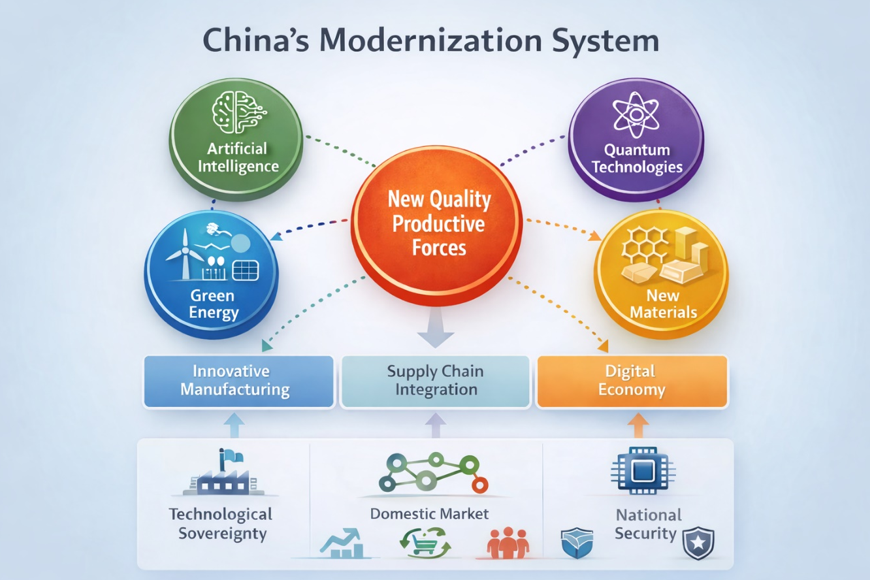
Figure 1. China’s Modernization System. Illustration created by the authors.
Beijing is consolidating a holistic development model in which fiscal, technological, and social policies are subordinated to the goal of strengthening national security. At its core is the concept of “new quality productive forces,” focused on the development of strategic technologies—artificial intelligence, quantum solutions, new materials, and green energy. These industries are viewed not only as growth drivers but also as the foundation of the country’s defense potential and technological autonomy.[15] Implementation is ensured through advanced manufacturing mechanisms, supply chain integration, and the digital economy, with a strengthened role for the state in coordinating resources and accelerating the implementation of developments, including those with dual (civil-military) uses. The target model is aimed at achieving technological sovereignty, expanding the domestic market, and maintaining national security.
As a result, a “high-quality development” model is emerging, where economic growth serves as a tool for ensuring technological independence, social stability, and national security. The key challenge remains the balance between large-scale investments in technology projects and the need to maintain macroeconomic stability, including debt control. The transition to a new modernization architecture consolidates the strategy of technological leadership. The concept of “new quality productive forces” integrates key areas into a system of national megaprojects, where the state acts as coordinator and investor, creating a closed technological ecosystem resilient to external pressure.
Transformation of the Logic of the PRC’s Five-Year Planning
Five-year plans in China are, first and foremost, a strategic management tool: they set out the state’s priorities, development frameworks for industries and regions, and a political hierarchy of goals. While the early cycles (including the 10th Five-Year Plan [2001–2005]) focused on growth rates, structural restructuring, and infrastructure, beginning with the 11th and especially the 12th and 13th Five-Year Plans, planning increasingly shifted to the quality of growth: energy efficiency, environmental constraints, innovation, and social sustainability. This is evident in the establishment of binding energy intensity indicators already in the 11th Five-Year Plan and the further expansion of “qualitative” indicators in the 12th.
By the 14th and 15th Five-Year Plans, another supporting axis is finally taking shape: the development-security nexus. The 14th Plan already articulates the goal of “coordinating development and security” and makes national security a cross-cutting principle, and the 15th cycle strengthens this to the level of architecture, where technology policy is directly linked to defense development and resilience to external pressure. China is attempting to create a self-sufficient system in which its technological leadership and industrial might will become key instruments for ensuring national security in the context of a transforming multipolar world.[16]
The 15th Five-Year Plan (2026–2030) marks a shift in the logic of Chinese planning: from anti-crisis stabilization to long-term structural and technological mobilization. While the 14th Five-Year Plan (2021–2025) served as an adaptation “buffer” after the pandemic and launched a “dual circulation” strategy,[17] the new cycle institutionalizes the concept of “new quality productive forces” as the core of modernization. At the same time, the priority of high growth rates is being abandoned: the target GDP range for 2026 is set at 4.5–5 percent, and the evaluation system is shifting toward qualitative indicators—technological implementation, energy efficiency, and the share of the digital economy.[18]
The key difference of the 15th Five-Year Plan is the shift from declaring scientific breakthroughs to their practical implementation. While the previous cycle focused on building a foundation for technological independence, the focus now is on integrating AI, quantum technologies, and biomanufacturing into real production chains. China is thus moving from a catch-up growth model to developing its own technological ecosystems capable of setting standards and modernizing traditional industries.[19]
The structure of priorities is also significantly transformed. Social policy, technological development, openness, and defense are viewed as elements of a unified national security system. Unlike the 14th Five-Year Plan, where the social agenda focused on poverty reduction, in the new cycle it is integrated into the technological agenda: automation and AI are viewed as tools for adapting to demographic aging and a shrinking workforce.
The principle of “openness” is also being rethought. China is moving toward a selective model: foreign investment is being limited to sectors critical to technological development and green energy. At the same time, the integration of civilian and defense technologies is being strengthened, creating a resilient dual-use system in the face of sanctions pressure.
In this logic, technological sovereignty is directly linked to defense strategy. AI, quantum technologies, and semiconductors are becoming not only economic drivers but also elements of strategic deterrence. The widespread adoption of AI through initiatives like “AI Plus” (人工智能+) is aimed at creating redundant production and logistics circuits that ensure the resilience of both the civilian and defense sectors (Ch. 13, Sec. 1).
Against this backdrop, domestic policy takes on an instrumental character. The expansion of the domestic market is combined with the goal of social stability, which is interpreted as a function of the population’s inclusion in the high-tech economy. At the same time, priority has effectively shifted toward industrial modernization, while external openness becomes selective and subordinate to the goals of technological enhancement.
Thus, the transition from the fourteenth to the fifteenth five-year plan signifies a shift away from reliance on global interdependence in favor of the formation of a self-sufficient, technologically closed system. In this model, industrial power and innovation are key instruments for ensuring national security.
In a broader context, the evolution of Five-Year Plans demonstrates a consistent shift in emphasis: from extensive growth and export orientation to domestic demand, environmental policy, and innovation. Although China generally achieved the key goals of previous plans, their implementation remained uneven. The 10th, 11th, and 12th Five-Year Plans ensured sustainable growth but maintained export dependence; the 13th advanced digitalization and social policy but failed to address the issue of technological autonomy; the 14th stabilized the economy and set a course for “dual circulation,” but only laid the foundations for sovereignty.[20] The 15th Five-Year Plan systematically links the technological, social, and defense agendas for the first time.
It is important to note that each five-year cycle was accompanied by a shift in China’s strategic development logic, reflecting a consistent shift in priorities—from a model of extensive growth and deep integration into the global economy to a focus on innovative development and domestic sustainability. While in the early stages, the key focus was on infrastructure expansion, demographic development, and export orientation, in subsequent plans, the emphasis gradually shifted toward stimulating domestic demand, environmental transformation, and technological modernization of the economy.
While the 10th Five-Year Plan (2001–2005) laid the foundation for modernization through structural restructuring, information technology, and large-scale urbanization, effectively forming the infrastructural framework for growth,[21] the 11th Five-Year Plan (2006–2010) shifted the emphasis from pace to quality—through energy efficiency, social adjustment, and the first elements of controlled restrictions, including strict target indicators.[22]
The 12th Five-Year Plan (2011–2015) saw a significant shift toward the domestic market and environmental agenda: domestic demand and “green” transformation became core planning elements, and the indicator system became more complex, incorporating qualitative parameters.[23] The 13th Five-Year Plan (2016–2020) solidified the transition to an innovative model: digitalization, technological development, and social inclusion became key elements, while China maintained its integration into global markets, albeit under more challenging conditions.[24]
The 14th Five-Year Plan (2021–2025) was transitional in nature. Amid the pandemic and geopolitical pressure, a “dual circulation” strategy was developed, aimed at balancing domestic and external demand. At the same time, the first systemic steps toward technological sovereignty were launched—from reducing dependence on external supply chains to rethinking openness as a selective tool. This five-year plan effectively served as an adaptation buffer, defining the limits of the previous model of global integration.[25]
The 15th Five-Year Plan (2026–2030) institutionalizes this shift. For the first time, the focus shifts from growth per se to the formation of “new quality productive forces”—through state mobilization of resources in critical technologies, the introduction of quality indicators, and the direct linkage of the economy to national security objectives. Technological development is integrated with the defense sector, forming a unified system of civil-military synergy (Ch. 55–56). As a result, China is shifting from a logic of catch-up development to a model of managed technological leadership, where economic policy becomes a tool for ensuring strategic autonomy and resilience in the face of external deterrence.[26]
| Transformation of China’s Five-Year Planning | ||
| Five-Year Plan (Years) | Basic Focus of Development | Innovations Compared to the Previous Cycle |
| 10th
(2001–2005) |
Structural restructuring, informatization, infrastructure and urbanization as the engine of modernization | Accelerating the transition to “infrastructure—investment” models new scale and formalization urbanization How strategies development |
| 11th
(2006–2010) |
“Quality of growth” through energy efficiency and social adjustment of development; mandatory energy intensity indicators, “scientific concept of development.” | Shift from prioritizing pace to managing resource/ecological constraints; introducing strict binding targets How tool disciplines of the regions. |
| 12th
(2011–2015) |
Development of domestic demand, environmental policy, “Green” restructuring and energy / carbon efficiency; consolidation climatic goals V national plan. | Strengthening the role of the internal market, Ecology and climate become part of the core of planning (not an “add-on”), expanding the system of quality indicators. |
| 13th
(2016–2020) |
Innovation, digitalization, poverty reduction, integration into global markets. | Introduction of the concept of “innovative China,” focusing on the digital economy and social equality. |
| 14th
(2021–2025) |
The “dual circulation” strategy, the first steps towards technological independence, and post-pandemic anti-crisis stabilization. | The transition from global integration to balancing domestic and foreign demand, the transition from “global embeddedness” to supply chain resilience and technological sovereignty; the formula “development + security” is becoming part of the basic framework. |
| 15th
(2026–2030) |
Institutionalization of “new quality productive forces,” state mobilization of resources for breakthroughs in critical technologies; strengthening national security and defense; linking technologies and combat capabilities, high-quality development indicators, and the formation of a self-sufficient system. | Abandoning catch-up economic growth and transitioning to a model of technological leadership. A qualitative leap in the defense sector, a direct requirement for the integration of new quality productive forces and new combat capabilities. |
Table 1. Transformation of China’s Five-Year Planning. Table created by the author.
The evolution of China’s five-year planning demonstrates a consistent shift from a model of accelerated modernization driven by infrastructure and external integration to a system focused on technological sovereignty, domestic resilience, and security. While the starting point was an economy integrated into global supply chains and relying on investment and demographic resources, by the mid-2020s, China had developed a model in which growth is subordinated to the goals of control over critical technologies, resilience to external pressure, and the integration of its civilian and defense sectors.
By 2030, China will likely be able to strengthen its position in key technology sectors and increase labor productivity. However, complete self-sufficiency remains a challenge: dependence on external resources and the need for large-scale investment in science limit the pace of transformation. In the long term, through 2035, success will depend on the ability of the governance system to synchronize technological development, social sustainability, and defense strategy within a unified framework.
China’s Development Model in the Context of Global Uncertainty
The new Five-Year Plan in China has effectively launched the practical phase of implementing the long-term “Vision 2035” strategy, cementing the transition to a new type of development. In this framework, the 15th Five-Year Plan (2026–2030) no longer simply represents the next stage of development, but rather serves as a connecting link, transforming accumulated quantitative growth into qualitative advantage. The integration of 2026 decisions into the 2035 horizon is built around the accelerated implementation of “new quality productive forces” in industry and infrastructure. Official documents have documented a revision of performance criteria: priority is shifting from GDP growth rates to system sustainability, technological autonomy, and the level of well-being of the population.[27]
China is steadily shifting from its role as a mass-market producer to developing its own technological ecosystems. The emphasis is on sectors capable of setting standards, such as quantum technologies, intelligent engineering, and next-generation energy.[28] This is not about preserving the previous model of globalization, but rather a transition to selective openness: market access is combined with active subsidies for critical industries and the consolidation of control over key technological segments.[29] This model creates an asymmetric interdependence in which external players remain involved in Chinese supply chains, while China itself reduces its vulnerability to external pressure.
The mechanism for technological mobilization is also undergoing significant transformation. The focus on technological sovereignty is becoming proactive: the formation of autonomous value chains in AI, robotics, and semiconductors is combined with internal competition, increasing the system’s efficiency. While the public sector previously played a key role, the 2026 decisions demonstrate the expansion of private capital participation. Conditions are being created for high-tech companies to accelerate their entry into capital markets, allowing for investment to be concentrated in priority areas.
China’s role in the global economy is gradually changing: instead of exporting low-cost products, the country is strengthening its position as a supplier of technological solutions—from energy transition equipment to digital platforms. This is expanding its influence and strengthening its role as a systemic hub for developing economies.
The demographic factor is acquiring particular significance. An aging population is viewed not as a constraint, but as a stimulus for accelerated automation and the development of a “silver economy” (Ch. 40). The large-scale implementation of AI, the adaptation of the education system, and the modernization of healthcare are aimed at increasing productivity and compensating for the shrinking labor force.[30] Thus, achieving the 2035 goals is linked primarily to the quality of human capital, not its quantity.
In its foreign economic activities, China is seeking to cement its status as a provider of infrastructure and technological solutions. The transformation of the Belt and Road Initiative (一带一路) reflects a shift from construction to technology exports—primarily in green energy and digital systems (Ch. 23).[31] Amid growing protectionism from developed countries, Beijing is developing alternative frameworks for cooperation, offering integrated modernization models to countries in the Global South. Taken together, this is shaping a new long-term trajectory: the 15th Five-Year Plan is becoming a tool not only for achieving national goals but also for cementing China’s role as one of the architects of the emerging multipolar economic order.
Conclusions
The Fifteenth Five-Year Plan charts a long-term development trajectory for China, integrating the economy of the future, social sustainability, defense integration, and political governance into a single system. This model aims to ensure China’s resilience in the face of global uncertainty and secure its role as a key leader in the emerging multipolar order by 2035.
The transition to a new model is driven by the exhaustion of previous sources of growth and a changing external environment. Demographic resources, export expansion, and infrastructure investment no longer guarantee sustainability, while sanctions pressure, technological competition, and the fragmentation of the global economy require the development of a self-sufficient system. Under these conditions, relying on “new quality productive forces” takes on a dual function—economic and strategic—allowing for reduced dependence on external markets and critical supplies.
The new 15th Five-Year Plan marks a transition in the Chinese development model to a fundamentally different logic—from a focus on growth as an end in itself to a system where economic dynamics are subordinated to the goals of sustainability, technological autonomy, and security. The decisions of the “two sessions” of 2026 cement this shift: a moderate GDP target range (4.5–5 percent) establishes basic macroeconomic stability, while key benchmarks become energy efficiency, the level of digitalization, the adoption of advanced technologies, and social balance. In this model, the economy serves as a tool for achieving strategic goals—primarily national security and technological leadership.
The emerging modernization architecture relies on several interconnected elements: technological development will form the core of the future economy and defense sector, social sustainability, and political and institutional governance. Thus, the economy of the future is built around “new quality productive forces”—artificial intelligence, quantum technologies, new materials, and semiconductors—with their direct integration into production chains and the formation of large-scale national megaprojects (Ch. 8, Sec. 2). Social sustainability is ensured through adaptation to demographic changes, the development of a “silver economy,” income distribution reform, and the stimulation of domestic demand (Ch. 40; Ch. 42). Political firmness is manifested in the state’s ability to centrally mobilize resources, maintain control over critical sectors, and ensure synergy between civilian and defense technologies. At the same time, the defense component is becoming systemically important: the development of high technologies is directly linked to the modernization of weapons, the military industry, and the creation of sustainable dual-use systems (Ch. 55–56).
Macroeconomic signals point to the emergence of an internally integrated model, replacing the previous logic of global interdependence. China is gradually moving toward selective openness, limiting external participation to sectors critical to technological development and the energy transition. This creates an asymmetrical interdependence: external partners remain involved in Chinese value chains, while China itself is strengthening its own autonomy.
Following this logic, Beijing is building internal resilience across all key areas: technological (autonomous supply chains and its own standards), economic (reliance on the domestic market and productivity), social (demographic and consumption management), energy (resource control and a green transition), and defense (integration of civilian and military technologies). This multilayered resilience is seen as the foundation for strengthening its foreign policy role. For the period 2026–2030, this envisions moderate growth rates coupled with accelerated technological modernization and rising labor productivity. By 2035, China has the potential to significantly increase its per capita GDP through automation, digitalization, and investment in human capital, consolidating its position in key technological sectors.
Externally, China is seeking to cement its role as a systemic stabilizer and provider of infrastructure and technological solutions. Exports of green energy and digital platforms are becoming a tool for expanding its influence, primarily in countries of the Global South. By maintaining domestic stability amid global instability and Western fragmentation, China is effectively laying claim to the role of a support center and “patron” for developing economies, offering them an alternative development model. In the future, amid possible deepening differences within the Western bloc, including transatlantic tensions, this strategy could be expanded to include Europe.
Endnotes
[1] Balázs Sárvári, “A kínai gazdaságpolitika értékrendi pillérei” [Normative Pillars of the Chinese Economic Policy], in Etikus közgazdaságtan [Ethical Economics], ed. György Kocziszky (Magyar Nemzeti Bank, 2019), 297–322.
[2] “Zhonghua Renmin Gongheguo guomin jingji he shehui fazhan di shiwu ge wunián guihua gangyao 中华人民共和国国民经济和社会发展第十五个五年规划纲要(草案)” [Outline of the 15th Five-Year Plan (2026–2030) for National Economic and Social Development of the People’s Republic of China], NPC Observer, March 2026, https://npcobserver.com/wp-content/uploads/2026/03/15th-Five-Year-Plan-Draft_NON-FINAL.pdf.
[3] “Outline of the 15th Five-Year Plan (2026–2030) for National Economic and Social Development of the People’s Republic of China,” EU–China Legal Economic Reform Agenda, 2026, https://www.wko.at/ktn/aussenwirtschaft/euclera-translation-15th-five-year-plan-2026-2030-.pdf.
[4] Throughout this article, parenthetical references in the form (Ch. X, Sec. Y) indicate the chapter and section of the 15th Five-Year Plan where the cited measure or concept is addressed.
[5] “Full Text: Recommendations of the Central Committee of the Communist Party of China for Formulating the 15th Five-Year Plan for National Economic and Social Development,” The State Council of the People’s Republic of China, October 28, 2025, https://english.www.gov.cn/news/202510/28/content_WS6900adb9c6d00ca5f9a07216.html; “Full Text: Explanation of the CPC Central Committee’s Proposals for Formulating the 15th Five-Year Plan for National Economic and Social Development,” TheoryChina, October 29, 2025, https://ru.theorychina.org.cn/c/2025-10-29/1534657.shtml.
[6] Gergely Salát, “A Kínai Népköztársaság 15. ötéves terve” [The 15th Five-Year Plan of the People’s Republic of China], Hungarian Institute of International Affairs, March 30, 2026, https://hiia.hu/wp-content/uploads/2026/03/A-Kinai-Nepkoztarsasag-15.-oteves-terve.pdf.
[7] “New Quality Productive Forces,” Xinhua News Agency, March 3, 2026, https://english.news.cn/20240306/a2905236963f4b00adae5e8b1b6c2c2f/c.html.
[8] “What Did We Learn from China’s Biggest Political Meeting?,” BBC News, March 6, 2026, https://www.bbc.com/news/articles/cvg80pedxeyo.
[9] “What to Watch at China’s Two Sessions as New Five-Year Plan Begins,” China Daily, March 3, 2026, https://www.chinadaily.com.cn/a/202603/03/WS69a69396a310d6866eb3b608.htm.
[10] “中华人民共和国国民经济和社会发展第十五个五年规划纲要(草案)摘要” [Summary of the Outline of the 15th Five-Year Plan for National Economic and Social Development of the People’s Republic of China (Draft)], 人民网两会, March 5, 2026, http://lianghui.people.com.cn/2026/n1/2026/0305/c461827-40675523.html.
[11] “Xi Focus: Charting a Course for China’s Growth with New Quality Productive Forces,” Xinhua News Agency, March 9, 2026, https://english.www.gov.cn/news/202603/09/content_WS69ae1095c6d00ca5f9a09bb2.html.
[12] “China Approves 2026–2030 Blueprint, Maps out High-Quality Path toward Modernization,” The State Council of the People’s Republic of China, March 13, 2026, https://english.www.gov.cn/news/202603/13/content_WS69b36c11c6d00ca5f9a09d96.html.
[13] Alicia García-Herrero, and Robin Schindowski, “China’s Quest for Innovation: Progress and Bottlenecks,” Bruegel, June 20, 2023, https://www.bruegel.org/sites/default/files/private/2023-06/WP%2008_3.pdf.
[14] Lin, Jiang, Nan Zhou, Mark Levine, and David Fridley, “Achieving China’s Target for Energy Intensity Reduction in 2010: An Exploration of Recent Trends and Possible Future Scenarios,” Ernest Orlando Lawrence Berkeley National Laboratory, December 2006, https://eta-publications.lbl.gov/sites/default/files/lbl-61800-2010-energy-reductiondec-2006.pdf.
[15] “Charting a Course for China’s Growth with New Quality Productive Forces,” People’s Daily Online, March 9, 2026, http://www.chinatoday.com.cn/ctenglish/2018/ttxw/202603/t20260309_800432378.html.
[16] Salát, “A Kínai Népköztársaság 14. ötéves terve” [The 15th Five-Year Plan of the People’s Republic of China].
[17] “Outline of the 14th Five-Year Plan and Long-Range Objectives Through 2035,” Xinhua News Agency, March 13, 2021, http://www.xinhuanet.com/english/2021-03/13/c_139807970.htm.
[18] “China’s New Five-Year Plan Will Embrace the Industry – and Once Again Give Consumers the Cold Shoulder,” Mercator Institute for China Studies, February 26, 2026, https://merics.org/en/comment/chinas-new-five-year-plan-will-embrace-industry-and-once-again-give-consumers-cold-shoulder.
[19] The State Council of the People’s Republic of China, “China Approves 2026–2030 Blueprint.”
[20] Xinhua, “Outline of the 14th Five-Year Plan and Long-Range Objectives Through 2035.”
[21] “The 10th Five-Year Plan (2001–2005),” China.org.cn, http://www.china.org.cn/english/MATERIAL/157629.htm.
[22] C. C. Fan, “China’s Eleventh Five-Year Plan (2006–2010): From ‘Getting Rich First’ to ‘Common Prosperity,’” Eurasian Geography and Economics 47, no. 6 (2006): 708–723, https://doi.org/10.2747/1538-7216.47.6.708.
[23] Gang Fan and He Liping, “China’s 12th Five-Year Plan,” KraneShares, October 2013, https://kraneshares.com/resources/2013_10_kfyp_fan_gang_white_paper.pdf.
[24] “The 13th Five-Year Plan for Economic and Social Development of the People’s Republic of China (2016–2020),” National Development and Reform Commission, 2016, https://en.ndrc.gov.cn/policies/202105/P020210527785800103339.pdf.
[25] Xinhua, “Outline of the 14th Five-Year Plan and Long-Range Objectives Through 2035”; Salát, “A Kínai Népköztársaság 14. ötéves terve” [The 15th Five-Year Plan of the People’s Republic of China].
[26] “Preparing for ‘Changes Unseen in a Century’: What to Expect From China’s New Five-Year Plan,” Tony Blair Institute for Global Change, February 18, 2026, https://institute.global/insights/geopolitics-and-security/what-to-expect-from-chinas-new-five-year-plan.
[27] “China’s 15th Five-Year Plan: Priorities and Direction,” Mercator Institute for China Studies, February 15, 2026, https://merics.org/en/report/chinas-15th-five-year-plan.
[28] “Reaction: China’s 15th Five-Year Plan,” Climate Action Tracker, March 6, 2026, https://climateactiontracker.org/press/reaction-chinas-15th-five-year-plan/.
[29] “China to Accelerate IPO Approvals for Tech Firms,” Financial Times, January 18, 2026, https://www.ft.com/content/china-tech-ipo-reforms.
[30] “China: Demographic Trends and Long-Term Outlook,” World Bank, September 22, 2025, https://www.worldbank.org/en/country/china/publication.
[31] “The Belt and Road Initiative in a Changing Global Context,” Organization for Economic Co-operation and Development, June 3, 2025, https://www.oecd.org/china/belt-and-road-initiative-evolution; Balázs Sárvári and Anna Szeidovitz, “The Political Economics of The New Silk Road,” in The Belt & Road Initiative in the Global Arena, eds. Song Cheng et al. (Palgrave Macmillan – Springer Nature, 2018).