
Awaiting Judgment: Could the Legacy of the Kosovo Liberation Army Be Tarnished?

HIIA Analysis – Written by Szidónia Lángné Petruska
The Kosovo Specialist Chambers and Specialist Prosecutor’s Office are scheduled to announce their first-instance verdict on September 16, 2026, in the case against four former leaders of the Kosovo Liberation Army (Ushtria Çlirimtare e Kosovës – UÇK) on charges of war crimes and crimes against humanity. This analysis examines the background to the establishment of this hybrid justice institution, the course of the proceedings, and their domestic political and geopolitical implications. The institution’s creation in 2015 was the result of a delicate compromise between the European Union, the United States, and Pristina. The central tension in the process lies in the fact that while the institution’s mandate is to hold individuals criminally accountable, in both Kosovar and international discourse, the process is often conflated with the debate over the moral and legal legitimacy of the struggle that the UÇK regards as a war of independence.
The 2020 arrests of former UÇK leaders who had become government officials fundamentally reshaped the political landscape in Kosovo, contributing to the rise of the Self-Determination Movement (LVV), a political party that does not derive its legitimacy from the former UÇK’s war of liberation. A potential acquittal and the release of those involved – particularly Hashim Thaçi – could also impact the domestic political balance of power; but due to the social consensus surrounding the assessment of the liberation war, even the political opponents of the UÇK successor parties (including Kurti and politicians from the Democratic League of Kosovo, which is considered the UÇK’s historical political rival) are compelled to stand by the defendants. A potential guilty verdict could spark deep social outrage in Kosovo, and the outcome of the case could also influence the international perception of hybrid criminal justice. According to the analysis’s conclusion, the first-instance verdict does not yet bring the debate to a close, but it may usher in a new, more intense phase in the ongoing debate over Kosovo’s wartime legacy and the legitimacy of its statehood; the content of the verdict, the institution’s communications, and the conduct of Kosovo’s leaders will be decisive in shaping this next phase.
The PDF version is available here!
What Is at Stake in the “Hashim Thaçi et al.” Case
On September 16, 2026, the Hague-based Kosovo Specialist Chambers will deliver its first-instance verdict in the case of four former leaders of the Kosovo Liberation Army, who – under various modes of liability – are accused of war crimes and crimes against humanity committed during the 1998–1999 Kosovo War and immediately thereafter.
According to the indictment, during the period under investigation, Hashim Thaçi served as head of the UÇK’s Political and Information Directorate, and then, in late March 1999, became prime minister of the Provisional Government of Kosovo (PGoK) and commander-in-chief of the UÇK. Kadri Veseli played a leading role as a member of the UÇK’s political leadership and head of its intelligence service, and later as the minister responsible for intelligence in the PGoK. Rexhep Selimi headed the UÇK’s Operations Directorate and later became the PGoK’s minister responsible for public order and internal affairs. Jakup Krasniqi served as the UÇK’s official spokesperson and a member of its political leadership, and later as the PGoK’s spokesperson.
According to the indictment, the four defendants are charged, among other things, with war crimes and crimes against humanity related to persecution, unlawful detention, torture, assault, and murder committedduring the Kosovo War (1998–1999) and immediately thereafter. The allegations in the indictment include kidnapping, detention, and murder; the whereabouts of the remains of some of the missing persons remain unknown to this day. However, the current proceedings do not cover the allegations of organ trafficking linked to the UÇK that are widely circulated in public discourse. The number of victims could run into the hundreds.[1]
The pronouncement of the verdict will mark a decisive milestone in proceedings that have lasted nearly six years, the significance of which, however, may extend far beyond the question of the individual criminal liability of the four defendants. This is because a significant number of the former guerrilla army’s leaders also played a role in shaping the postwar Albanian political elite in Kosovo.[2] It is therefore at least as important to examine what impact the verdict may have on the historical assessment of the UÇK, on Kosovo society’s self-perception, and on the political narratives built upon the legacy of the war.[3]
This issue takes on particular significance in light of the fact that the Kosovo Specialist Chambers and Specialist Prosecutor’s Office (KSC&SPO), which are part of the Kosovar legal system and operate under national (Kosovar) law but are based in The Hague, was the result of a delicate compromise. Its establishment was grounded in the international demand to investigate crimes allegedly committed by certain members of the UÇK. The proceedings, which began in 2020, are thus both a legal and a political issue, and the special judicial structure is viewed with extreme controversy. Some see it as a means of delivering justice and ensuring accountability, while others view it as an attack on the war of liberation and its participants.[4] Ahead of the verdict scheduled for September 2026, this debate has intensified even further.
In particular, this study seeks to answer what consequences a potential guilty or not-guilty verdict might have on Kosovo’s domestic political and social conditions, as well as on its international reputation. In addition to presenting the institutional background and the history of the proceedings, it examines the positions that have emerged regarding the KSC&SPO, as well as their geopolitical implications. It does so with the understanding that the first-instance verdict of September 16 clearly does not bring the debate to a close, but it certainly marks a new phase in the ongoing discussion regarding the responsibility of UÇK leaders, the interpretation of the UÇK’s legacy, and the legitimacy of Kosovo’s independent statehood.
The Historical and Political Background to the Formation of the KSC&SPO
The UÇK, which was formed in the early 1990s with the aim of mounting armed resistance against the Serbs, was initially viewed by Western nations as an organization that employed terrorist tactics; however, this perception gradually changed as the Kosovo conflict escalated. International reports on the atrocities committed by Serbian and Yugoslav security forces against the Albanian civilian population in Kosovo played a significant role in this shift; as a result, the UÇK became an increasingly accepted actor in the international political arena.[5] However, this by no means implied unconditional trust in the organization; from the outset, the international community made the postwar demilitarization of the guerrilla army a condition for cooperation.[6] Following the withdrawal of Serbian and Yugoslav forces, attacks against Serbs and other communities – including Albanians perceived as collaborating with Serbian authorities—further heightened the concerns of Western powers.[7]
The need for an international investigation into alleged crimes committed by members of the UÇK emerged immediately after the Kosovo War, but it did not gain significant momentum until 2008. It was then that Carla Del Ponte, the former chief prosecutor of the International Criminal Tribunal for the former Yugoslavia (ICTY), in which she, among other things, published allegations regarding the trafficking of organs of individuals held captive by certain leaders of the guerrilla organization. He assessed that although substantial evidence was available regarding the UÇK’s responsibility for this, as well as for the wave of aggression following the war, the United Nations Interim Administration Mission in Kosovo (UNMIK) hindered the investigation against them. She also highlighted the cultural factors that prevent Albanians from testifying against one another and pointed out the shortcomings and difficulties of witness protection.[8] Del Ponte’s allegations were corroborated by the report titled “Inhuman Treatment of People and Illicit Trafficking in Human Organs in Kosovo”, published in 2011 and prepared by Dick Marty, rapporteur for the Parliamentary Assembly of the Council of Europe (often referred to as the Marty Report), which stated that specific and corroborating information indicated that Kosovars of Serbian and Albanian ethnicity were being held captive at sites in northern Albania under UÇK control, many of whom subsequently disappeared. According to the document, organs may have been removed from some of the detainees and transported abroad for transplantation.[9] The task of investigating these allegations was subsequently assigned to the Special Investigative Task Force (SITF), a team of international experts established by the European Union in September 2011.[10] In the summer of 2014, the SITF concluded that, based on the weight of the evidence gathered, charges could be filed, which in turn raised the need to establish a special judicial structure capable of adjudicating the cases independently and with appropriate safeguards.[11] Kosovo President Atifete Jahjaga and Catherine Ashton, the EU’s High Representative for Foreign Affairs and Security Policy, agreed on this in an exchange of letters in April 2014, which the Kosovo Parliament ratified as an international agreement in April 2014.[12]
On August 3, 2015, the Assembly of Kosovo adopted Article 162 of the Constitution,[13] , as well as Law No. 05/L-053 on the Kosovo Specialist Chambers and Specialist Prosecutor’s Office. A distinctive feature of this hybrid solution is that the KSC&SPO is formally part of the Kosovar legal system, yet it employs international judges, prosecutors, and other staff and is headquartered in The Hague. The Kosovo Specialist Chambers operates special judicial panels linked to the various levels of the Kosovo court system – the trial, appellate, supreme, and constitutional court levels – while the Special Prosecutor’s Office is responsible for investigations and prosecutions, as an institution separate from the courts.[14] On September 1, 2016, the SPO took over the staff and mandate of the SITF, and at the same time, the establishment of the KSC began. The new institution reached full operational capacity in July 2017.[15]
The circumstances surrounding the establishment of the KSC&SPO in and of themselves highlight the tension that has surrounded the institution’s reputation from the very beginning. Its creation took place under political pressure from the European Union and the United States, yet within the constitutional and legal framework of Kosovo. For Pristina, it was a particularly politically sensitive move to adopt a judicial mechanism that allowed for the investigation and adjudication of alleged crimes committed by former members of the UÇK – even as the UÇK had become a defining element of Kosovo’s statehood and national identity. At the same time, however, the Kosovar leadership could not refuse to cooperate if it wished to preserve Western political support and the prospect of Euro-Atlantic integration. (For this very reason – presumably on the advice of their Western partners – following the confirmation of the indictment, those involved cooperated with the authorities and did not attempt to stall the proceedings or flee.) For this reason, and given the specific characteristics of Albanian culture – particularly the close-knit nature of communities and strict moral norms – the protection of witnesses and victims would pose a particularly serious challenge in the political and social environment of Kosovo, as demonstrated by the severe cases of witness intimidation observed in the ICTY’s previous cases involving Kosovo.[16] The relocation of the KSC&SPO to The Hague was therefore not merely a technical solution: it served to strengthen the independence and impartiality of the proceedings, as well as the safety of witnesses and victims.
The “Thaçi et al.” Case from 2020 to the Present
No information about the SPO’s activities was made public during its first few years. Press reports about the first summonses first appeared in December 2018[17] , but the organization itself did not provide any information about its work. Even when Prime Minister Ramush Haradinaj resigned in July 2019, they did not respond to his claim that his decision was motivated by the fact that the organization had summoned him as a suspect[18] .[19]
The first significant details of the SPO’s activities became known to the public on June 24, 2020, when the prosecutor’s office unexpectedly announced in a statement that it had submitted an indictment against Thaçi, Veseli, and others to the KSC, which was under review. According to the statement, the indictment linked the two politicians and their (as yet unnamed) associates to a wide range of crimes against humanity and war crimes, holding them responsible for nearly one hundred murders. Among the hundreds of known victims of these crimes were Kosovo Albanians, Serbs, Roma, and members of other ethnic groups, including political opponents of Thaçi, Veseli, and their associates. The SPO justified the public release of information regarding the indictment by stating that the named individuals had repeatedly attempted to obstruct and undermine the work of the KSC.[20]
The SPO’s first arrests took place three months later. On September 24, 2020, Salih Mustafa, commander of the BIA guerrilla unit operating in the former Llap operational zone, was taken into custody and charged with four counts of war crimes.[21] The following day, two leaders of the UÇK veterans’ organization, Hysni Gucati and Nasim Haradinaj (Ramush Haradinaj’s cousin), were also arrested in connection with crimes involving witness intimidation and obstruction of justice.[22]
The second wave of arrests, which targeted former senior UÇK leaders, took place on November 4 and 5, 2020. Krasniqi was the first to be arrested and transported to The Hague. The next day, the KSC released the contents of the indictment against “Hashim Thaçi et al.”, as amended on October 26. As a result, Thaçi announced his resignation from the office of President of the Republic in a highly emotional and politically carefully crafted speech, and he, too, was transported to The Hague that same day, along with Veseli and Selimi.[23]
The SPO has charged Thaçi and his associates with four war crimes and six crimes against humanity committed between March 1998 and September 1999 in Kosovo and in the Kukës and Cahan regions of northern Albania. According to the prosecution, these acts were part of a widespread and systematic attack against individuals whom the defendants regarded as opponents of the UÇK and the Provisional Government of Kosovo. The central issue of the proceedings, however, is the determination of the individual criminal liability of the four defendants: the prosecution must prove that the defendants can be held individually liable for the crimes committed based on one of the modes of liability specified in the indictment. The prosecution, relying on the concept of “Joint Criminal Enterprise” (JCE) – a mode of criminal liability in international criminal law – that the “common criminal purpose” of the four defendants and other participants in the JCE was to gain and exercise control over the entire territory of Kosovo. The indictment lists six major categories of civilian victims: the Serbian, Roma and Ashkali[24] populations; Catholics; civilians allegedly collaborating with Serb authorities or allegedly interacting with Serbs ; Albanians affiliated to or supporting the Democratic League of Kosovo (LDK) or other parties perceived as anti- UÇK; Albanians who did not join or support the UÇK; and individuals with current or former employment perceived as anti-UÇK.[25]
The four defendants made their initial appearance before the KSC in November 2020, amid widespread media attention. After the charges against them were read, they all pleaded not guilty.[26]
The preliminary proceedings concluded on December 15, 2022. In the meantime, the indictment was amended three times, including additions regarding new places of detention and allegations of additional criminal offenses. The version submitted on February 27, 2023, became the final indictment serving as the basis for the trial.
The trial began on April 3, 2023, and the prosecution concluded its presentation of evidence on April 15, 2025. A total of 134 witnesses testified in person, while an additional 164 submitted written testimony.[27] A key element of the court’s legitimacy was the participation of the victims: 156 victims participated in the “Thaçi et al.” proceedings, and their legal representative filed the case in July 2025 at the KSC.[28] A significant factor was that by that time, convictions and reparation orders had already been issued in the cases of two individual defendants (Salih Mustafa and Pjetër Shala),[29] which may have strengthened the victims’ trust in the institution.
During the evidentiary phase of the trial, in the second half of 2025, only the defense teams for Krasniqi and Thaçi presented evidence. Thaçi’s defense team[30] called as witnesses seven former key international figures, including NATO and UN officials – six U.S. citizensand one British citizen – who played pivotal roles in the Kosovo War. James P. Rubin, former Assistant Secretary of State for Public Affairs and Chief Spokesman for the U.S. Department of State; retired U.S. General Wesley Clark, former Supreme Allied Commander Europe (SACEUR) of NATO; and their colleagues reinforced a fairly consistent narrative through their testimony: namely, that the UÇK did not possess a centralized military command structure from which Thaçi’s actual military leadership role or personal responsibility could have been derived.[31]
The evidentiary phase concluded on December 18, 2025, and closing arguments were presented in February 2026.[32] The announcement of the first-instance verdict was postponed several times due to the complexity of the case and the volume of evidence, and was finally scheduled for September 16, 2026. The scale of the trial is well illustrated by the fact that the court admitted 5,467 pieces of evidence, and the trial transcript totals 29,238 pages.[33]
However, prior to the first-instance verdict, between September 10 and 14, closing arguments will also be heard before the KSC in another case in which Thaçi is one of the defendants. According to the prosecution, in the case of “Hashim Thaçi et al. (Administration of Justice)” case, the former Kosovar president, through his co-defendants – who include a former intelligence chief, a former minister of justice, and UÇK veterans – sought to use various political, intelligence, and former UÇK networks to influence witnesses before the KSC&SPO.[34]
The Domestic Political and Social Significance of the Case
The formation of the KSC&SPO generated significant domestic political tensions from the very beginning. In order to consolidate its statehood internationally, Kosovo agreed to allow international prosecutors and judges to assess the intentions and actions of certain key figures in the war for independence, which was viewed as “just and righteous”. In 2015, Thaçi – who at the time served as Deputy Prime Minister and Minister of Foreign Affairs – played a key role in securing parliamentary approval, arguing that, in order to cooperate with the U.S., the EU, and NATO, it was time to clear up the unjust accusations leveled against Kosovo.[35] In 2020, even after the release of a statement regarding the indictment being prepared in his case, he emphasized his conviction that “no one can rewrite the history of Kosovo”.[36]
Nevertheless, beginning in 2017, political initiatives – in which Thaçi was also involved – were placed on the agenda on several occasions. These initiatives aimed to restrict the KSC&SPO’s operations, challenge its legal basis,[37] or provide legal protection for the values of the UÇK, in the latter case with the possibility of sanctioning negative opinions.[38] However, ultimately, under pressure from the U.S. and the EU, these measures did not receive the support necessary for their adoption.
The arrests in November 2020 marked a significant turning point in the realignment of Kosovo’s Albanian political elite. The four defendants in the “Hashim Thaçi et al.” case – who belonged to several competing factions within the political elite that emerged from the UÇK – were sidelined from the political forefront for an indefinite period as a result of the proceedings, which presumably also weakened the structures associated with them. This coincided with the significant rise of the Self-Determination Movement (LVV) – founded in 2004 but operating as a political party only since 2010 – and its leader, Albin Kurti. The movement’s 2021 campaign focused primarily on combating corruption and nepotism and on dismantling the “captured state.”[39] In the case of the PDK, however, Veseli’s departure paved the way for a renewal of the party’s leadership.[40]
One major source of resentment toward the KSC&SPO within Kosovar Albanian society is that these proceedings may create the impression that an equal sign can be drawn between the crimes committed by Yugoslav–Serbian forces during the Kosovo-war and the violations committed by the Kosovar Albanian armed resistance.[41] Aidan Hehir’s 2019 study concluded that even a perceived violation of the “heroic” UÇK narrative can provoke resistance within Kosovar Albanian society, and that the institution was therefore unable to establish significant local legitimacy.[42] This mistrust was further exacerbated by the protracted nature of the proceedings, the repeated rejection of requests for provisional release, and the fact that in February, the prosecution sought extremely long prison sentences (45 years) for each of the defendants.[43]
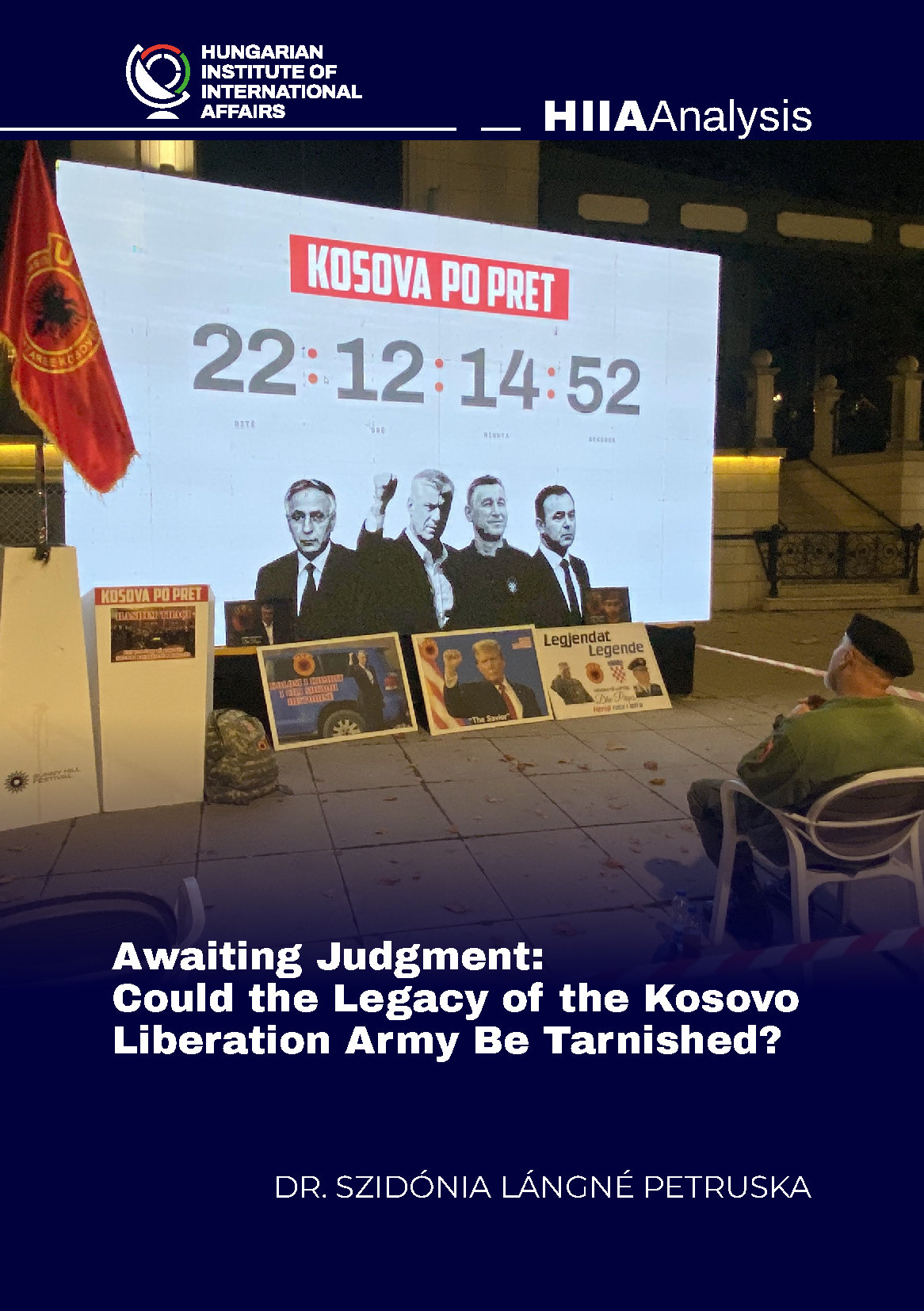
In recent years, UÇK veterans and supporters (such as the “Liria ka Emër” – “Freedom Has a Name” civic initiative) have sought to make it clear through political statements and street protests that they do not accept the KSC&SPO’s actions.[44] As the verdict approached, social mobilization intensified. Starting in August 2026, as part of the “Kosovo is Waiting” (“Kosova po pret”) campaign, large countdown clocks were installed in all Kosovar municipalities, counting down the time remaining until 10:00 a.m. on September 16, the date the verdict was to be announced. A series of events called “Nights of Freedom” was launched at locations in the seven former UÇK operational zones, and a demonstration titled “March for Freedom” (“Marshi për Liri”) was announced for September 12 in Pristina. The organizers invited the leaders of all four Albanian parliamentary parties to speak, which clearly indicates the social significance of the issue.[45] (However, according to Kosovar sources, Acting Prime Minister Albin Kurti may be in New York these days attending the UN General Assembly.[46])
In light of all this, it is questionable to what extent a potential guilty verdict would fulfill one of the essential, so-called “expressive” functions of criminal justice, namely, the “expression of societal disapproval”.[47] For this reason, it is a particular challenge for the KSC to ensure that the judgment on the individual criminal liability of the defendants in the “Hashim Thaçi et al.” case is clearly distinguished from the moral value judgment concerning the war of liberation as a whole.
The Geopolitical Dimension
Finally, it is worth addressing the issue that the operations of international and – like the KSC&SPO – hybrid courts are often accompanied by allegations of political influence. In this context, according to Gëzim Visoka, a Kosovo-born professor of peace and conflict studies, the KSC&SPO can also be interpreted as a geopolitical tool for “disciplining” the war elite.[48] In fact, the 2015 decision by the Kosovo Assembly to establish the KSC&SPO was followed by the signing of the EU–Kosovo Stabilization and Association Agreement by barely three months. The SPO began its substantive operations in December 2018, at a low point in Kosovo–Serbia relations, following Pristina’s unilateral decision to establish a national army. Ramush Haradinaj, who insisted on maintaining the punitive tariffs imposed on Serbia and Bosnia and Herzegovina – a move criticized by the international community – resigned in July 2019 after receiving a summons from the SPO to appear for questioning in The Hague. In June 2020, just three days before the Kosovo–Serbia summit in Washington initiated by Donald Trump, the SPO announced that it had filed an indictment against Hashim Thaçi and Kadri Veseli. (Thaçi was already on his way to the United States at the time, but returned to Kosovo upon hearing the news of the indictment.)[49] Of course, none of this proves that the timing of these individual steps was determined by geopolitical or political considerations, but it undoubtedly lends credence to the interpretation outlined above.
Certain analyses emphasize that the interests of the European Union and the United States do not necessarily align with regard to the KSC&SPO. From the outset, the EU has provided significant financial resources for the KSC&SPO’s operations; for this reason, for example, Dean B. Pineles, a former international criminal judge, suggests that the institution may face significant pressure to prove its legitimacy and secure a guilty verdict in the case of Thaçi and his associates.[50] However, this would create an awkward situation for Washington, as the United States was a key supporter of NATO’s intervention in Kosovo and, in military terms, its primary executor, while Thaçi has long maintained close ties with successive U.S. administrations. In this context, it is worth examining, for example, the testimony given by former U.S. Assistant Secretary of State James P. Rubin as a witness for Thaçi, in which he explicitly linked certain charges against UÇK leaders to Russian and Serbian propaganda narratives.[51]
Ultimately, all of this may be significant not only for the specific assessment of the KSC&SPO but also for the broader credibility of hybrid criminal justice. The legitimacy of such institutions depends not only on whether they issue legally sound judgments, but also on whether they are able to avoid the appearance of selectivity stemming from geopolitical interests, and whether the societies concerned, as well as international public opinion, view them as impartial forums for the administration of justice. [52]
After September 16 – Possible Scenarios
The first-instance verdict, scheduled to be announced on September 16, is expected to generate significant attention both within Kosovo and internationally. It is worth considering several possible scenarios.
In the event of a guilty verdict, criticism of the KSC&SPO is likely to intensify in Kosovo, and mass demonstrations – and possibly even attacks on foreign diplomatic missions – could occur. Meanwhile, for Serbia (and other actors supporting the Serbian position on the Kosovo issue, such as Russia), the verdict could reinforce the narrative that links the crimes committed by certain members of the UÇK to the legitimacy of the struggle for independence. While this would not in itself affect the legal status of Kosovo’s statehood, from a political perspective it could influence the international narrative on which Kosovo relies to secure acceptance of its independence and further international recognition.
A finding that the JCE existed would mean that it has been proven that the defendants – together with their other allies – committed the acts attributed to them in order to seize political power. This, in turn, would create a narrative that could be used in the domestic political arena against parties formed from the UÇK,[53] as it could nuance the prevailing perception of the legitimacy of the political elites that emerged from the UÇK. It would reinforce the interpretation that the UÇK’s political rivalry with other Kosovar Albanian entities in the late 1990s was not merely political but, in some cases, took the form of violent conflict. Particularly noteworthy in this regard would be the reaction of the LDK – a party historically rivaling the UÇK –, whose former members are listed among the alleged victims in the indictment.
In the event of an acquittal, the situation could, in certain respects, be the reverse of the above – since both Kosovo and Serbia would essentially assess it through the lens of their own conception of justice.[54] In Kosovo, interpretations emphasizing the (legal and moral) legitimacy of the UÇK’s war of liberation would gain traction, while from Serbia’s perspective, the verdict might be seen as evidence of bias within the justice system. For this reason, it would be particularly important for the reasoning behind the verdict and the institutional communication surrounding the announcement of the verdict to clearly distinguish between the issue of the defendants’ individual criminal liability and the historical and political assessment of the Kosovo War as a whole.
The possible acquittal and return of Thaçi and his associates could once again reshape the political balance of power in Kosovo. The return of Thaçi and Veseli could be particularly significant for the PDK, as the party has been unable to field a political leader of comparable stature since 2020. According to Bedri Hamza, the party’s current technocratic chairman, their return could open up new opportunities for the PDK, although neither has indicated any intention to do so thus far.[55] Clearing up the allegations would further strengthen Thaçi’s position in the eyes of Western powers, particularly the U.S., with whom – unlike the current leadership in Pristina – he cooperated constructively for two decades. Moreover, all of this could take place at a time when Kosovo has been grappling with political instability for more than a year and a half, and the key issue at present is reaching an agreement on the identity of the President of Kosovo.[56] (However, Thaçi’s detention could continue for an indefinite period in connection with the ongoing proceedings against him for obstruction of justice.) Kurti’s position is particularly controversial at present: while his political rivals are at stake, given the public sentiment, he has no choice but to stand up for the justice of the war of liberation and, by extension, the innocence of the defendants.[57]
Other possibilities include a partial conviction or the rejection of the JCE concept. In the latter case, the verdict would leave less room for the determination of individuals’ criminal liability to be conflated with the assessment of the UÇK as a whole.
Whichever scenario plays out, it will undoubtedly have a significant impact on the assessment of the defendants, the legitimacy of the KSC&SPO, and the ongoing debate over Kosovo’s “war legacy”. However, the first-instance verdict does not yet close the case; the appeals phase could prolong the proceedings for several more years.
Endnotes
[1] Specialist Prosecutor’s Office, Public (Lesser Redacted) Version of the Amended Indictment, KSC-BC-2020-06/F01323/A01, 2023, pp. 2–11. https://repository.scp-ks.org/LW/Published/Filing/0b1ec6e980e30019/ANNEX%201%20to%20Prosecution%20further%20submissions%20pursuant%20to%20Decision%20F01229%20with%20confidential%20Annex%201.pdf.
[2] At the time of his arrest, Hashim Thaçi was President of the Republic of Kosovo; he had previously served as Prime Minister, Minister of Foreign Affairs, and Deputy Prime Minister. Kadri Veseli became a leading figure in the political elite first as a former Speaker of the Assembly of Kosovo and later as the leader of the Democratic Party of Kosovo (Partia Demokratike e Kosovës – PDK), which was founded in 1999 with Hashim Thaçi playing a key role. After the war, Rexhep Selimi was affiliated with the Alliance for the Future of Kosovo (Aleanca për Ardhmërinë e Kosovës – AAK), and then joined the Self-Determination Movement (Lëvizja Vetëvendosje – LVV) in 2010. After the war, Jakup Krasniqi held various parliamentary and government positions. He served twice as acting head of state, fulfilling the duties of the President of Kosovo. He was first a member of the PDK, and then, starting in 2014, of the Social Democratic Initiative (Nisma Socialdemokrate – NISMA).
[3] Szidónia Lángné Petruska, “Kosovo: The Heritage of the UÇK,” in Proceedings of the 9th International Scientific Conference (2018), ed. Michal Hrnčiar (Liptovský Mikuláš, Slovakia: General Milan Rastislav Štefánik Armed Forces Academy, 2018), 220–232 https://www.academia.edu/44732536/KOSOVO_THE_HERITAGE_OF_THE_U%C3%87K .
[4] Szidónia Lángné Petruska, “Újraírható-e Koszovó történelme? A Koszovói Különleges Törvényszék és Különleges Ügyészség felállításának és eddigi működésének tapasztalatai,” in A hadtudomány és a 21. század 2021, ed. Ildikó Szelei (Budapest: National Association of Doctoral Students, Department of Military Science, 2021), 251–263 https://hdi.uni-nke.hu/document/hdi-uni-nke-hu/hadtudomany-es-a-21-szazad-kotet-2021.pdf#page=252 .
[5] Independent International Commission on Kosovo, *The Kosovo Report: Conflict, International Response, Lessons Learned* (Oxford: Oxford University Press, 2000), https://balkanwitness.org/KosovoReport.htm.
[6] Roger Boyes and Suzy Jagger, *New State, Modern Statesman: Hashim Thaçi – A Biography* (London: Biteback Publishing, 2018), 74–77.
[7] András Borsányi, The Mystery of the Kosovo Liberation Army (UÇK) (Budapest: BONA-L Bt., 2000), 176–185.
[8] Carla Del Ponte and Chuck Sudetic, *Madame Prosecutor: Confrontations with Humanity’s Worst Criminals and the Culture of Impunity* (New York: Other Press, 2009), 229–248.
[9] Dick Marty, “Inhuman Treatment of People and Illicit Trafficking in Human Organs in Kosovo,” Council of Europe: Parliamentary Assembly, January 7, 2011, https://pace.coe.int/en/files/12608/html.
[10] Council of the European Union, Annual Report from the High Representative of the European Union for Foreign Affairs and Security Policy to the European Parliament, 2012, p. 36, https://www.eeas.europa.eu/sites/default/files/documents/st14924_en.pdf.
[11] Clint Williamson, “Statement of the Chief Prosecutor of the Special Investigative Task Force,” Special Investigative Task Force, July 29, 2014, p. 2, https://balkaninsight.com/wp-content/uploads/2019/01/Statement_of_the_Chief_Prosecutor_of_the_SITF_EN.pdf.
[12] Kosovo Specialist Chambers, Specialist Chamber of the Constitutional Court, Judgment on the Referral of Proposed Amendments to the Constitution of Kosovo, KSC-CC-2020-11, November 26, 2020, https://repository.scp-ks.org/LW/Published/Filing/0b1ec6e98039a633/Judgment%20on%20the%20Referral%20of%20Proposed%20Amendments%20to%20the%20Constitution%20of%20Kosovo.pdf.
[13] Republic of Kosovo, Constitution of the Republic of Kosovo, Article 162, as amended on August 3, 2015.
[14] Republic of Kosovo, Law No. 05/L-053 on Specialist Chambers and Specialist Prosecutor’s Office, August 3, 2015, https://gzk.rks-gov.net/ActDetail.aspx?ActID=11036.
[15] Kosovo Specialist Chambers and Specialist Prosecutor’s Office, “Background,” accessed September 10, 2026, https://scp-ks.org/en/background.
[16] International Criminal Tribunal for the Former Yugoslavia, Prosecutor v. Ramush Haradinaj, Idriz Balaj, and Lahi Brahimaj, Appeal Judgment, IT-04-84-A, July 19, 2010, p. 16, https://www.icty.org/x/cases/haradinaj/acjug/en/100721.pdf.
[17] Die Morina, “Kosovo: First Guerrilla Commanders Called to the Hague,” Balkan Insight, December 25, 2018, https://balkaninsight.com/2018/12/25/kosovo-first-guerrilla-commanders-called-to-the-hague-12-19-2018/btj/ .
[18] A summons as a suspect does not in itself constitute an indictment; the filing of an indictment falls within the prosecutor’s discretion. Haradinaj’s 2019 hearing before the SPO did not constitute a “reopening” of the ICTY proceedings; criminal proceedings against him could not have been reopened before the KSC&SPO regarding the same acts that had already been finally adjudicated by the ICTY.
[19] Fatos Bytyci, “Kosovo’s PM Quits after Being Called to Hague War Crimes Court,” Euronews, July 19, 2019, https://www.euronews.com/2019/07/19/kosovos-pm-says-quits-after-being-called-to-hague-war-crimes-court.
[20] Kosovo Specialist Chambers and Specialist Prosecutor’s Office, “Press Statement,” accessed September 10, 2026, https://www.scp-ks.org/en/press-statement.
[21] Kosovo Specialist Chambers and Specialist Prosecutor’s Office, “Salih Mustafa,” accessed September 10, 2026, https://prd-main.scp-ks.org/en/cases/salih-mustafa.
[22] Kosovo Specialist Chambers and Specialist Prosecutor’s Office, “Hysni Gucati and Nasim Haradinaj Case,” accessed September 10, 2026, https://www.scp-ks.org/en/cases/hysni-gucati-nasim-haradinaj.
[23] Michael Birnbaum, “Kosovo President Thaci Resigns to Face War Crimes Charges in The Hague,” The Washington Post, November 5, 2020, https://www.washingtonpost.com/world/europe/kosovo-president-thaci-resigns-war-crimes-hague/2020/11/05/c7054fe0-1f65-11eb-ad53-4c1fda49907d_story.html.
[24] The Roma, Egyptians, and Ashkali (RAE communities) in Kosovo constitute three communities that face similar social challenges but define themselves as ethnically distinct.
[25] Kosovo Specialist Chambers, “Indictment against Hashim Thaçi, Kadri Veseli, Rexhep Selimi, and Jakup Krasniqi confirmed by KSC Pre-Trial Judge,” November 5, 2020, https://www.scp-ks.org/en/indictment-against-hashim-thaci-kadri-veseli-rexhep-selimi-and-jakup-krasniqi-confirmed-ksc-pre.
[26] Kosovo Specialist Chambers, KSC Annual Report 2020 (Kosovo Specialist Chambers, 2021), p. 21, https://www.scp-ks.org/sites/default/files/public/content/ksc_online_annual_report2020-eng.pdf .
[27] United Nations Security Council, United Nations Interim Administration Mission in Kosovo: Report of the Secretary-General, S/2026/264, 2026, https://digitallibrary.un.org/nanna/record/4109530/files/S_2026_264-EN.pdf.
[28] Kosovo Specialist Chambers and Specialist Prosecutor’s Office, “Thaçi et al. Trial Judgment Scheduled for September 16, 2026,” accessed September 10, 2026, https://www.scp-ks.org/en/thaci-et-al-trial-judgment-scheduled-16-september-2026.
[29] Kosovo Specialist Chambers, “Cases,” accessed September 6, 2026, https://www.scp-ks.org/en/cases.
[30] Thaçi’s defense team is led by Croatian attorney Luka Mišetić, who previously represented Croatian General Ante Gotovina before the ICTY. The Croatian general was acquitted by the Appeals Chamber in 2012.
[31] “When Wesley Clark comes to the defense,” Justice Info, November 24, 2025, https://www.justiceinfo.net/en/152619-when-wesley-clark-comes-to-the-defence.html.
[32] Kosovo Specialist Chambers, “Cases,” accessed September 6, 2026, https://www.scp-ks.org/en/cases.
[33] Kosovo Specialist Chambers, “Live Update,” accessed September 6, 2026, https://www.scp-ks.org/en/live-update?case=All&date_end=&date_start=&field_court_target_id=All&page=2.
[34] Kosovo Specialist Chambers, “Hashim Thaçi et al. (Administration of Justice),” accessed September 6, 2026, https://www.scp-ks.org/en/cases/hashim-thaci-et-al-administration-justice.
[35] Office of the Prime Minister of the Republic of Kosovo, “Government of the Republic of Kosovo Held Its 17th Meeting,” March 7, 2015, https://kryeministri.rks-gov.net/en/news/government-of-the-republic-of-kosovo-held-its-17th-meeting/.
[36] United Nations Interim Administration Mission in Kosovo (UNMIK), UNMIK Media Observer, Afternoon Edition, June 26, 2020, https://media.unmikonline.org/index.php/newsletters/unmik-media-observer-afternoon-edition-june-26-2020.
[37] Medina Kadriu, Special Trials (Kosovo Law Institute, 2022), p. 9, https://kli-ks.org/wp-content/uploads/2022/06/Special-Trials.pdf.
[38] Periskopi, “Kosovo Still without Law for KLA Values,” July 1, 2026, https://periskopi.com/en/2026/7/kosovo-law-kla-values.
[39] Sarah E. Garding, “Kosovo: Background and U.S. Policy,” Congressional Research Service, April 8, 2021, p. 1, https://www.everycrsreport.com/reports/R46175.html.
[40] “Memli Krasniqi Elected Chairman of the Democratic Party of Kosovo (PDK),” Euronews Albania, July 3, 2021, https://euronews.al/en/memli-krasniqi-elected-chairman-of-the-democratic-party-of-kosovo-pdk/.
[41] “Thousands in Kosovo Rally Against War Crimes Trial of Former KLA Commanders,” Reuters, February 17, 2026, https://www.reuters.com/world/thousands-kosovo-rally-against-war-crimes-trial-ex-kla-commanders-2026-02-17/.
[42] Aidan Hehir, “Lessons Learned? The Kosovo Specialist Chambers’ Lack of Local Legitimacy and Its Implications,” Human Rights Review 20, no. 3 (2019): 267–287, https://doi.org/10.1007/s12142-019-00564-y.
[43] Fatos Bytyci, “Thousands in Kosovo Rally Against War Crimes Trial of Ex-KLA Commanders,” Reuters, February 17, 2026, https://www.reuters.com/world/thousands-kosovo-rally-against-war-crimes-trial-ex-kla-commanders-2026-02-17/.
[44] “’Liria ka Emër’: The freedom fighters are not alone; there is an entire people demanding justice,” KosovaPress, February 17, 2026, https://kosovapress.com/liria-ka-emer-clirimtaret-nuk-jane-vet-qendron-nje-popull-i-tere-qe-do-drejtesi.
[45] Nen Si, “Verdict for Former KLA Leaders: March for Freedom on September 12,” Euronews Albania, August 23, 2026, https://euronews.al/en/verdict-for-former-kla-leaders-march-for-freedom-on-september-12/ .
[46] “Hysa: September 16 Remains the Most Important Date for Kosovo After February 17,” Koha, September 2, 2026, https://koha.mk/en/hysa-16-shtatori-mbetet-per-kosoven-data-me-e-rendesishme-pas-17-shkurtit/.
[47] Joel Feinberg, “The Expressive Function of Punishment,” The Monist 49, no. 3 (1965): 400–401, https://doi.org/10.5840/monist196549326.
[48] Serbeze Haxhiaj, “Kosovo’s Special Court: between justice and distrust,” Justice Info, July 9, 2026, https://www.justiceinfo.net/en/161582-kosovos-special-court-between-justice-and-distrust.html.
[49] Szidónia Lángné Petruska, Koszovó biztonságföldrajzi értékelése, Ph.D. dissertation (National University of Public Service, Doctoral School of Military Sciences, 2023), p. 263, https://doi.org/10.17625/NKE.2023.025.
[50] Dean B. Pineles, “Thaci Trial Verdict Will Decide Legacy of Kosovo Specialist Chambers,” Balkan Insight, March 4, 2026, https://balkaninsight.com/2026/03/04/thaci-trial-verdict-will-decide-legacy-of-kosovo-specialist-chambers/btj/.
[51] Agon Maliqi, “What the Looming Verdict in Thaçi War Crimes Trial Could Mean for Kosovo, the Balkans, and Beyond,” Atlantic Council, October 2, 2025, https://www.atlanticcouncil.org/blogs/new-atlanticist/what-the-looming-verdict-in-thaci-war-crimes-trial-could-mean-for-kosovo-the-balkans-and-beyond/.
[52] Nevenka Tromp, “Justice in the Dock: The Kosovo Specialist Chambers and a Crisis of Legitimacy,” Balkan Insight, May 11, 2026, https://balkaninsight.com/2026/05/11/justice-in-the-dock-the-kosovo-specialist-chambers-and-a-crisis-of-legitimacy/.
[53] In none of its judgments concerning Kosovar Albanian defendants did the ICTY find the existence of a Joint Criminal Enterprise.
[54] Nevenka Tromp, “Justice in the Dock: The Kosovo Specialist Chambers and a Crisis of Legitimacy,” Balkan Insight, May 11, 2026, https://balkaninsight.com/2026/05/11/justice-in-the-dock-the-kosovo-specialist-chambers-and-a-crisis-of-legitimacy/.
[55] “Hamza: With the Return of Thaçi and Veseli, PDK Will Also Grow,” Gazeta Express, July 2, 2026, https://www.gazetaexpress.com/en/Hamza–with-the-return-of-Thaci-and-Veseli–the-PDK-will-also-grow/ .
[56] Xhorxhina Bami, “Kosovo Parliament to Reconvene, ‘Chaos’ Looms over Election of President,” Balkan Insight, September 8, 2026, https://balkaninsight.com/2026/09/08/kosovo-parliament-to-reconvene-chaos-looms-over-election-of-president/bi/ .
[57] “Statement by VV MP Kurti: We are convinced of the justness of the war and the innocence of the KLA leaders in The Hague,” Reporteri, April 22, 2026, https://reporteri.net/en/NEWS/Statement-by-the-MP-of-the-VV–Kurti–that-we-are-convinced-of-the-just-war-and-the-innocence-of-the-leaders-of-the-UCK-in-The-Hague/.